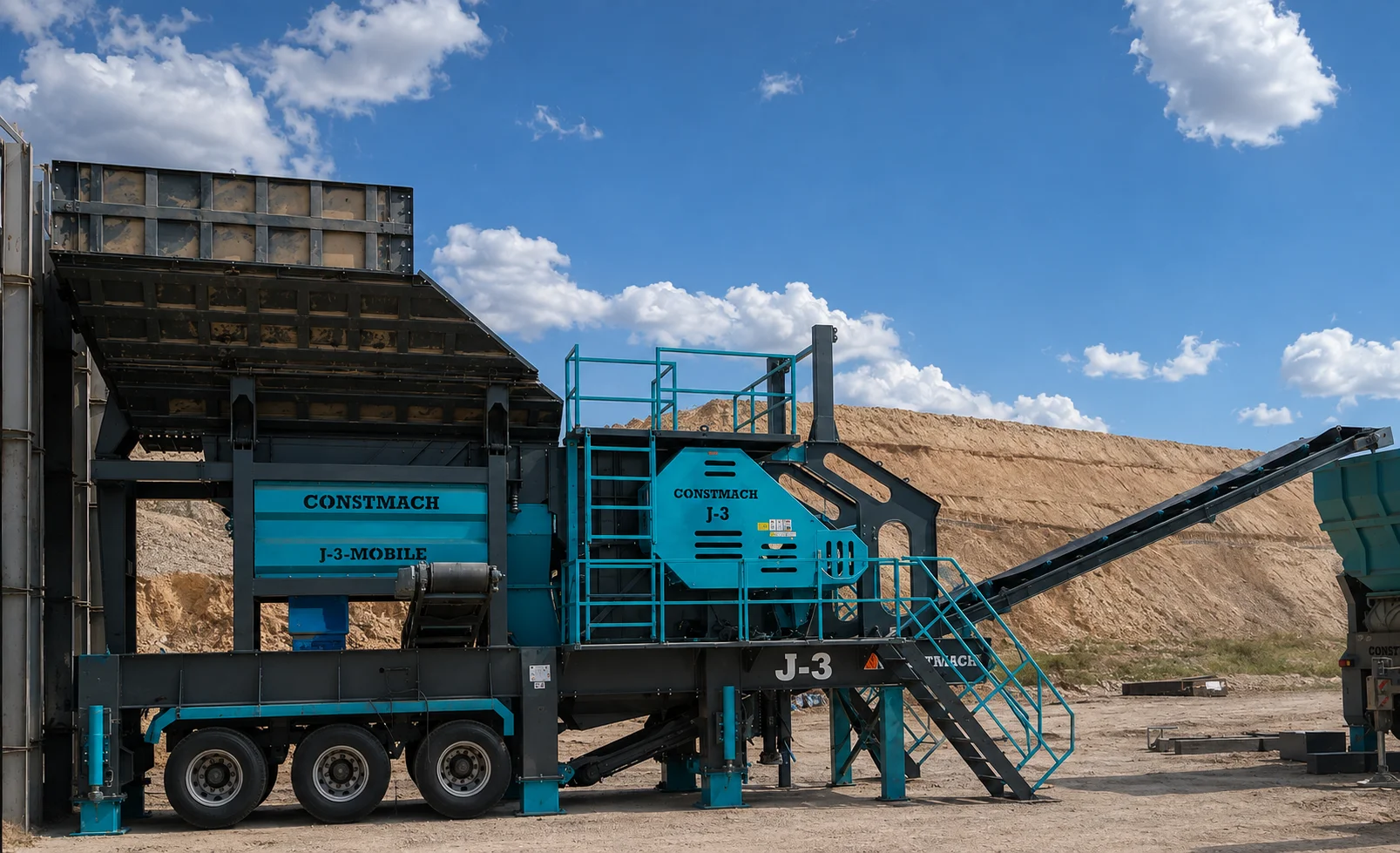

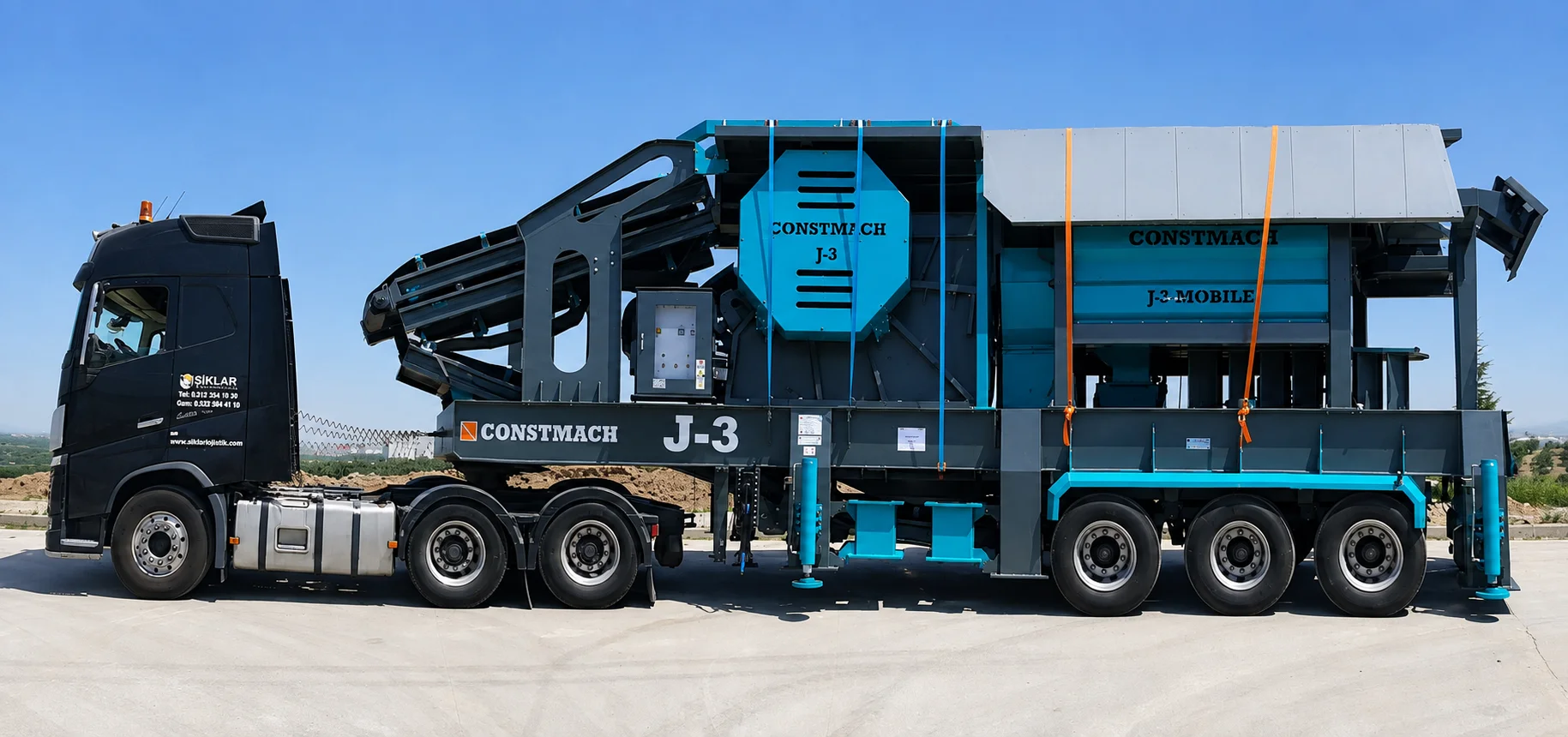
J-3 Mobile Recycling Plant is bought by large demolition contractors, infrastructure and urban renewal programmes, and commercial recycling operations that take in rubble from several sources. It is the largest model of the Constmach J Series, chosen where the daily tonnage is high enough to need a 175 kW plant and the feed pieces coming off the demolition are too big for the smaller models.
What J-3 Produces
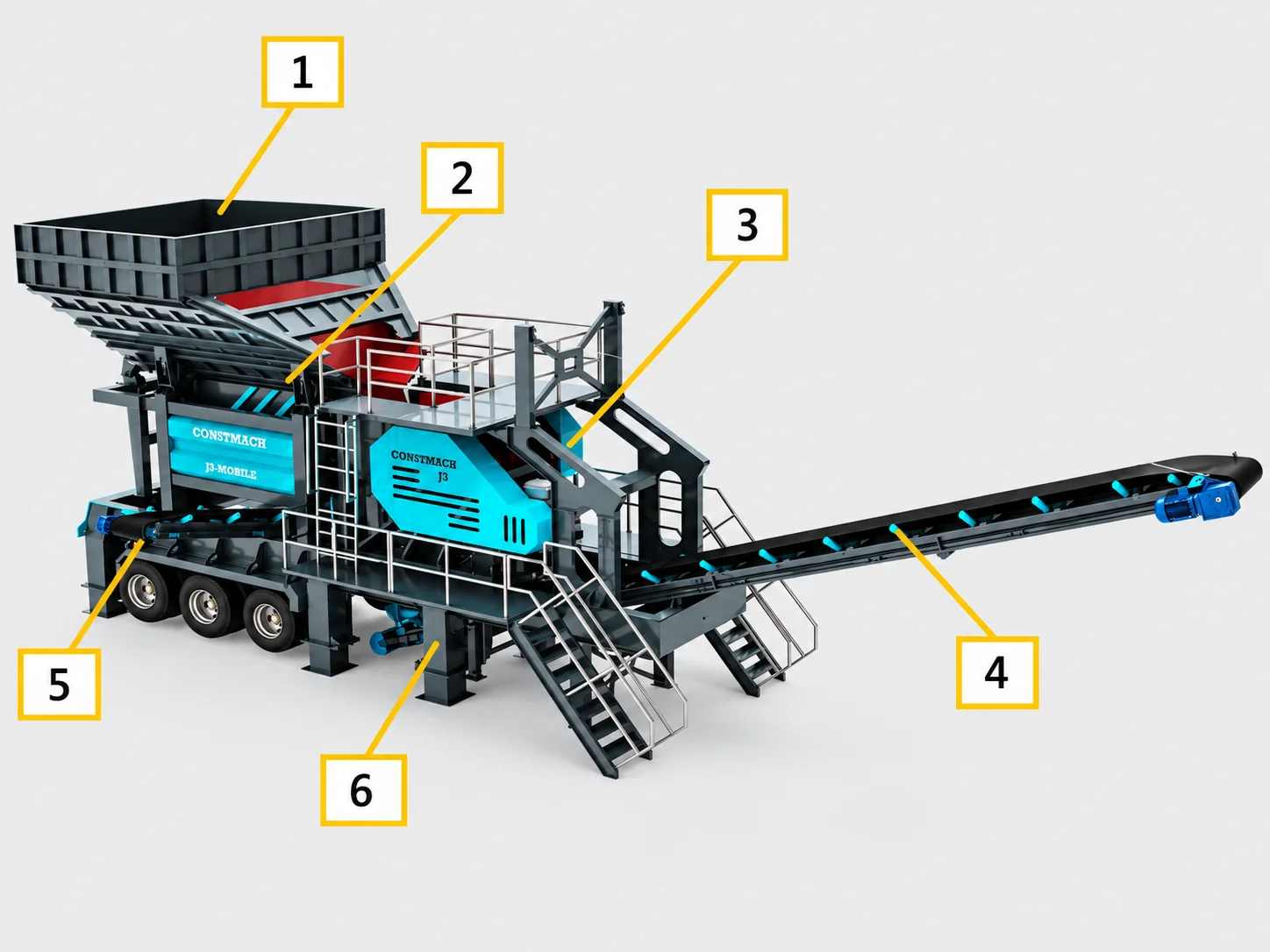
J-3 produces recycled aggregate from construction and demolition waste at up to 250 tph. The feed is concrete waste, reinforced concrete, demolition debris, bricks and masonry rubble, taken in through a 1,050 × 800 mm opening and reduced in a single pass by the primary jaw crusher. A 20 m³ feeding hopper holds enough material to keep the crusher fed between excavator cycles, and the grizzly feeder meters it forward at a steady rate. The by-pass conveyor pulls soil and fine material out of the flow before crushing, and with the optional magnet separator fitted, ferrous metal from reinforced concrete is removed from the discharge, producing aggregate suitable for sub-base, fill and new concrete.
Suitability Factors
J-3 suits operations where: the output requirement is above roughly 150 tph, feed pieces reach up to 1,050 × 800 mm, and the plant is relocated between major projects rather than every few weeks. The feeding height is 6.3 metres, which calls for a larger excavator than the smaller models need, or a ramp. Site requirements are a flat load-bearing pad with room for a large stockpile, and either a mains supply matching the 175 kW total motor power or a generator of about 450 kVA. At 55 tonnes and 13 × 3.4 × 4.5 metres, transport needs an abnormal-load assessment on most routes. Where tonnage is lower or sites are tight, J-1 or J-2 are more practical.
Operating Considerations
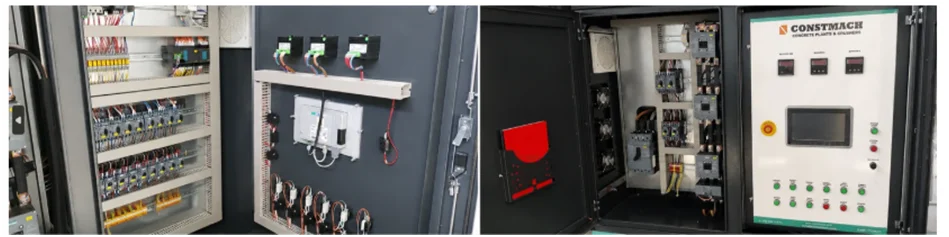
At 250 tph the wear rate is the main operating cost: jaw plates, grizzly bars, feeder liners and belts all run harder than on the smaller models, and recycled concrete with rebar in it is more abrasive than quarried stone. Jaw plates are bolted and reversible, so they are turned once before replacement, and keeping a set on site avoids lost production. The dust removing system needs a reliable water supply at this throughput and a daily nozzle check. The double-layer panel-in-panel enclosure protects the PLC and EATON components from dust and rain. Constmach supplies a recommended spare-part list matched to expected operating hours.
Comparison to Alternatives
Compared with hauling rubble to a disposal site and buying virgin aggregate back, J-3 removes both haulage legs and the tipping cost on the largest tonnages, which is where the saving is greatest. Compared with a stationary crushing and screening plant at similar capacity, J-3 gives up secondary crushing, multi-deck screening into several graded fractions, and the lowest cost per tonne over a long plant life; it gains the ability to move to the next major project without dismantling or new foundations. Against J-1 and J-2 it is the highest-capacity and largest-feed model, and the least suited to confined urban sites.