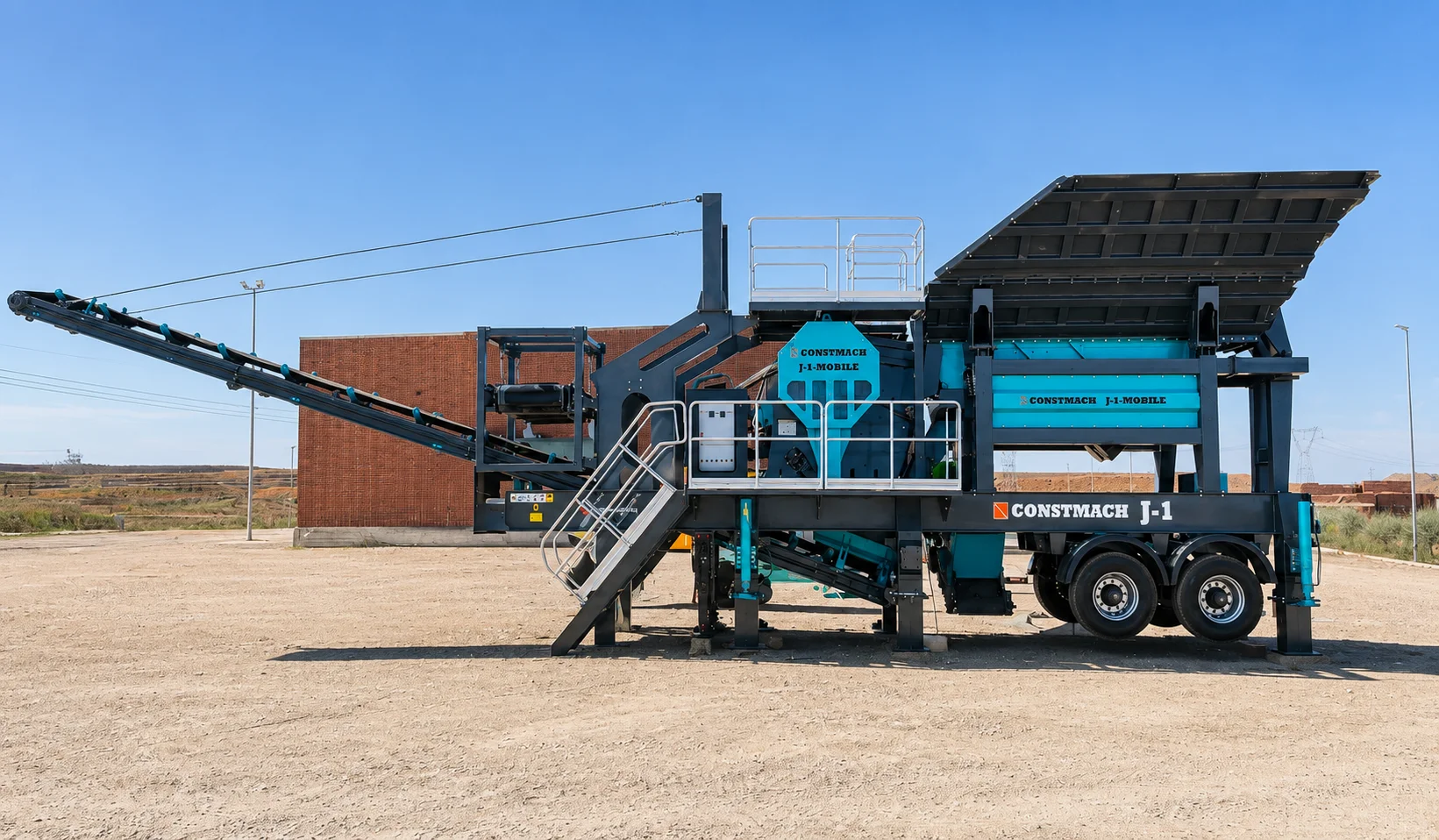

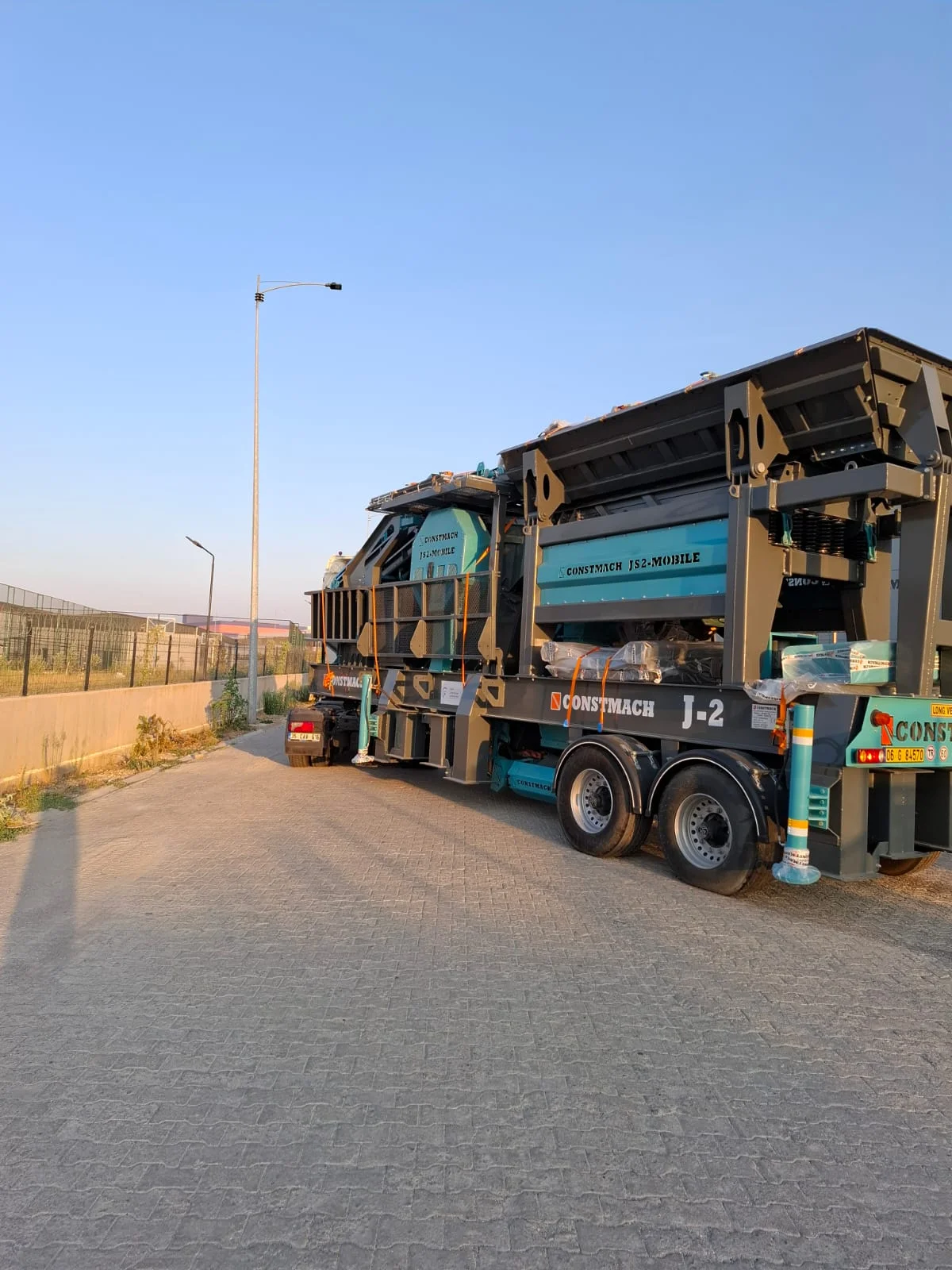
J-2 Mobile Recycling Plant is bought by demolition and earthworks contractors, urban renewal programmes and recycling yards that process steady volumes of rubble and need more output than an entry-level plant gives. It is the middle model of the Constmach J Series, chosen where the tonnage is high enough to justify a 95 kW plant but the work still moves from site to site.
What J-2 Produces
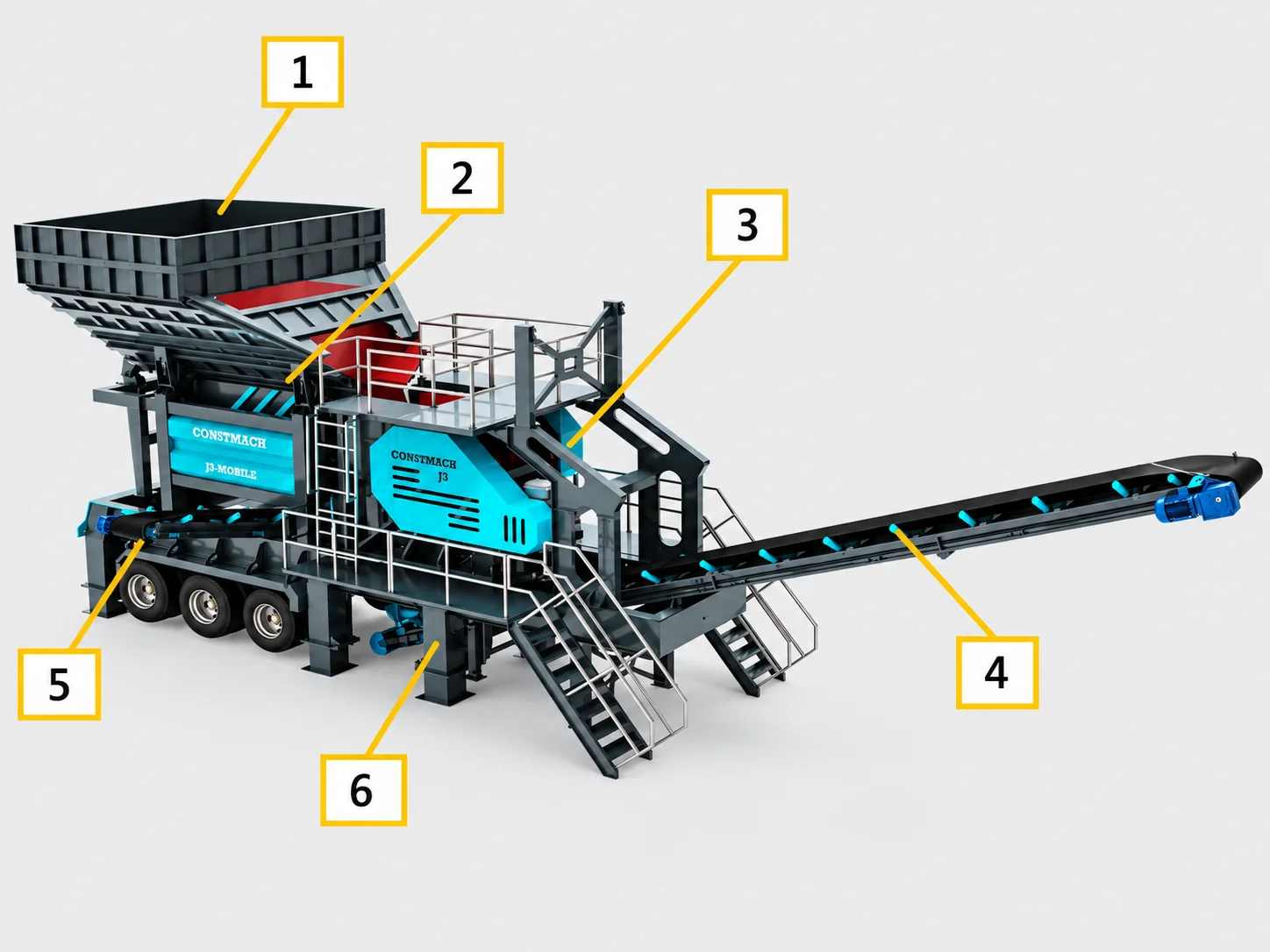
J-2 produces recycled aggregate from construction and demolition waste at 120–150 tph. The feed is concrete waste, reinforced concrete, demolition debris, bricks and masonry rubble, taken in through a feed opening of 850 × 600 mm and reduced in one pass by the CJC-90 primary jaw crusher. The grizzly feeder meters material into the crusher at a steady rate, and the by-pass conveyor removes soil and fines before crushing so the product stays clean. With the optional magnet separator fitted, ferrous metal from reinforced concrete is lifted off the discharge, producing an aggregate suitable for sub-base, fill and new concrete.
Suitability Factors
J-2 suits projects where: feed pieces fit the 850 × 600 mm opening, the output target is between roughly 100 and 150 tph, and the plant will be relocated during its working life. The feeding height is 4.5 metres, which sets the reach needed from the excavator or loader feeding it. Site requirements are a flat load-bearing pad, room for the stockpile and feed machine, and either a mains supply matching the 95 kW total motor power or a generator of about 250 kVA. At 35 tonnes and 11 × 3.2 × 4.5 metres it travels as a single low-bed load, so transport permits should be checked against local limits. Below 100 tph the smaller J-1 is more economical; above 150 tph, J-3.
Operating Considerations
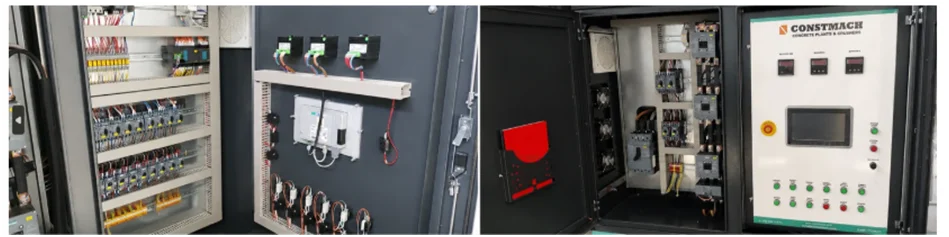
Wear on J-2 concentrates on the jaw plates, grizzly bars, feeder liners and conveyor belts, because recycled concrete is abrasive and carries rebar ends that shorten plate life compared with clean quarried rock. Jaw plates are bolted and reversible, so they are turned once before being replaced. The dust removing system needs a water supply and a daily nozzle check, since demolition dust blocks nozzles faster than quarry dust. The double-layer panel-in-panel enclosure protects the PLC and EATON components from dust and rain. Constmach supplies a recommended spare-part list matched to expected operating hours.
Comparison to Alternatives
Compared with hauling rubble off site and buying virgin aggregate back, J-2 removes both haulage legs and the tipping cost at the tonnage where those costs are largest, which is why it is usually the fastest-paying model of the three. Compared with a stationary recycling line at the same capacity, J-2 gives up multi-stage crushing, screening into several graded fractions, and peak throughput, and gains relocation without dismantling. Against J-1 it roughly doubles capacity and takes a larger feed piece; against J-3 it is lighter, cheaper to move and easier to place on a constrained site.