J-1 Mobile Recycling Plant is bought by demolition contractors, urban renewal projects and small quarry or recycling yards that need to turn rubble into reusable aggregate without hauling it away first. It is the entry model of the Constmach J Series, chosen where the site is tight, the job moves often, and the daily tonnage does not justify a larger plant.
What J-1 Produces
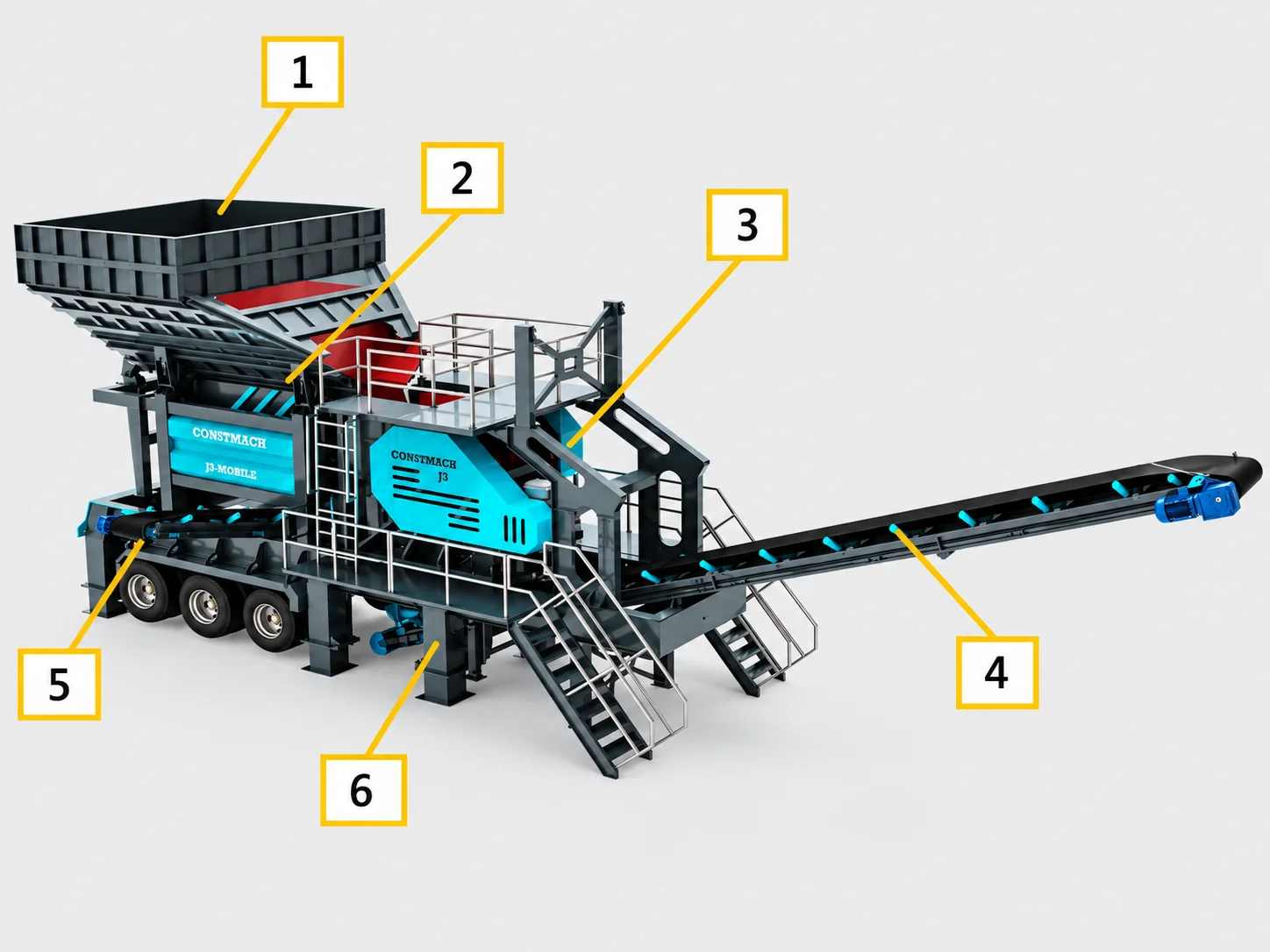
J-1 produces recycled aggregate from construction and demolition waste at 60–80 tph. The feed material is concrete waste, reinforced concrete, demolition debris, bricks and similar masonry rubble, reduced in a single pass through the CJC-60 primary jaw crusher. Product size is set by the crusher's closed-side setting, and the by-pass conveyor takes soil and fine material out of the flow before crushing so the finished aggregate stays clean. Where the feed contains reinforcement steel, the optional magnet separator lifts ferrous metal off the discharge, giving an aggregate that can go back into sub-base, fill or new concrete.
Suitability Factors
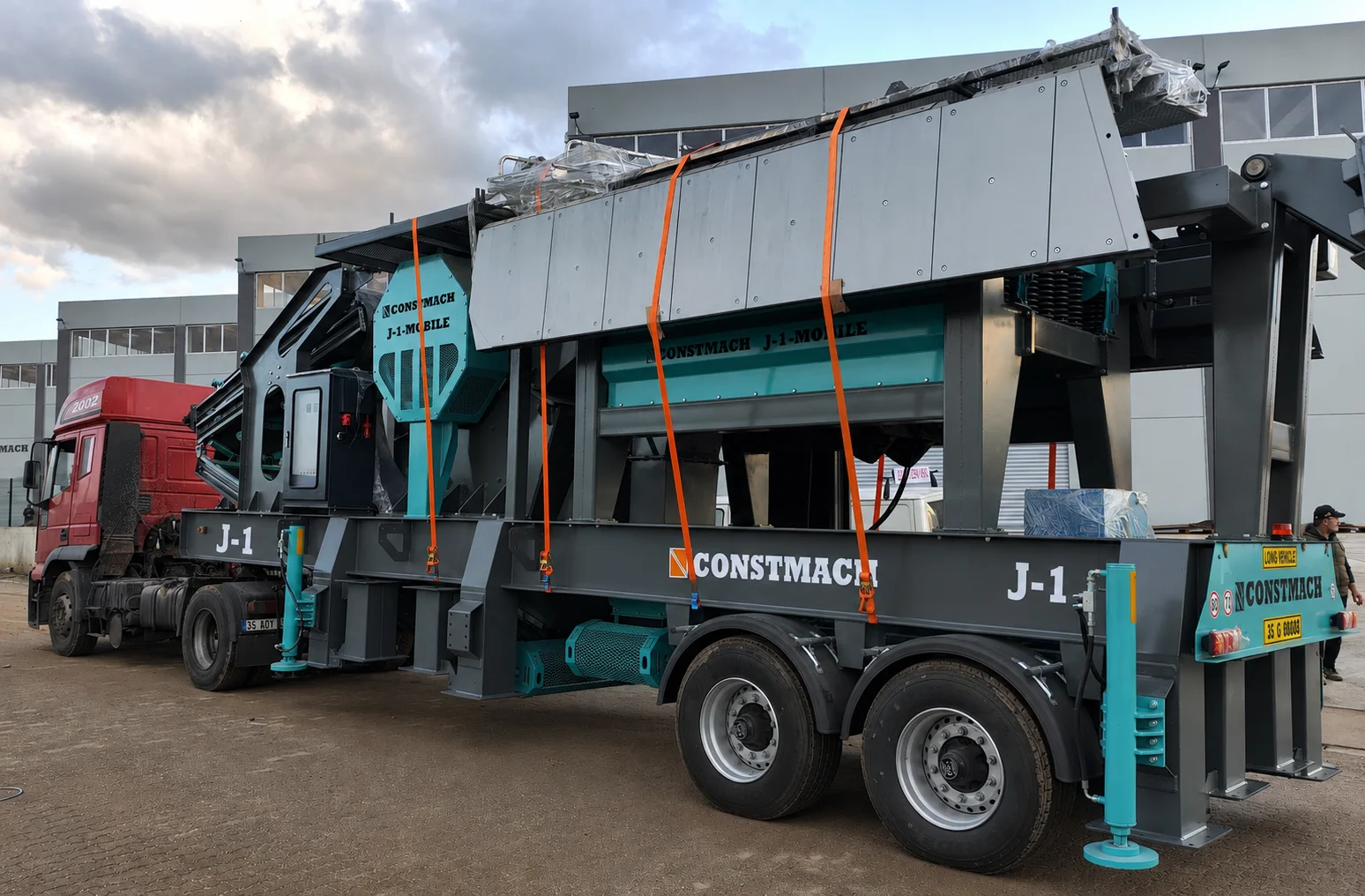
J-1 suits projects where: the feed rock or rubble fits the 600 × 380 mm jaw opening, the required output is up to roughly 80 tph, and the plant must be relocated between sites. It stands on a single wheeled chassis with hydraulic supporting legs, so it needs a flat load-bearing pad rather than engineered foundations, and it can be prepared for work without civil works. Where the demand is consistently above 80 tph, or the feed pieces are larger than the jaw opening, J-2 or J-3 are the appropriate models. For permanent high-tonnage production on a fixed site, a stationary crushing and screening plant is a better fit than any mobile recycling plant.
Operating Considerations
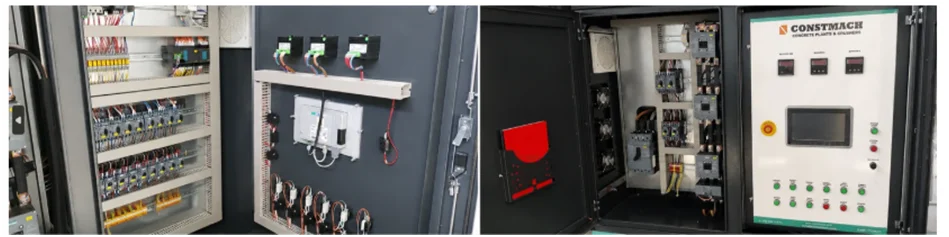
Day-to-day attention on J-1 goes to the jaw plates, the feeder liners and the conveyor belts, since recycled concrete is abrasive and contains rebar ends that wear a crusher faster than clean quarried rock. Jaw plates are reversible and bolted, so they are turned once before replacement. The dust removing system needs its water supply checked daily on dry demolition sites. The control panel's double-layer panel-in-panel enclosure keeps dust and rain off the PLC and the EATON components, which matters more on demolition sites than in a quarry. Constmach supplies the recommended spare-part list with the plant.
Comparison to Alternatives
Compared with sending rubble to a disposal site and buying virgin aggregate back, J-1 removes two haulage legs and the tipping cost, which is usually where it pays for itself. Compared with a stationary recycling line of similar capacity, J-1 gives up peak throughput and the option of multi-stage crushing and screening, and gains the ability to follow the work from one demolition site to the next without dismantling. Against J-2 and J-3 it is the smallest and most manoeuvrable of the three, and the easiest to place on a confined urban site.