What Is an Asphalt Plant? How Does It Work Step by Step?
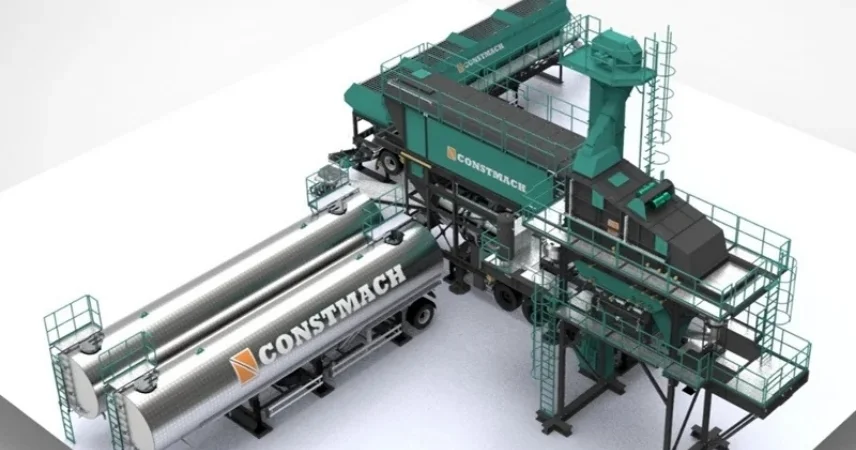
An asphalt plant is an industrial facility that dries and heats aggregates, then blends them with bitumen and mineral filler in precise proportions to produce hot mix asphalt (HMA). The process runs step by step: cold feed dosing, drying in a burner-fired drum, screening and weighing, mixing, and finally storage or truck load-out. Mixing takes place at roughly 140-180°C, and plants are built as batch (discrete) or drum (continuous) types.
Every paved road begins in the same place: an asphalt plant. Long before a paver spreads the black mat and rollers compact it, aggregates have been dried, heated and coated with bitumen under tightly controlled conditions, because asphalt that leaves the plant wrong can never be fixed on the road.
The machine behind that responsibility is less mysterious than it looks. An asphalt plant follows a fixed sequence of steps, runs inside a narrow temperature window and comes in a small number of well-defined types, each built for a different kind of project.
What Is an Asphalt Plant and What Does It Produce?
An asphalt plant is an industrial facility that dries and heats aggregates, then blends them with bitumen and mineral filler in precise proportions to produce hot mix asphalt (HMA), the material used to pave roads. Everything the plant does serves one goal: delivering a homogeneous mix at the right temperature and the right recipe.
The recipe has a name. Each paving job runs on a job mix formula (JMF), a specification that fixes the aggregate gradation, the binder content and the production temperature for that particular mix. The plant's task is to proportion, blend and heat the materials so every tonne leaving the gate matches the formula.
Output is measured in tonnes per hour, and the mix is a perishable product. Hot mix asphalt must be transported, placed and compacted while still hot, which is why plants are located within practical hauling distance of the work they feed.
What Is Hot Mix Asphalt (HMA) Made Of?
Hot mix asphalt is roughly 95 percent aggregate, crushed stone, sand and gravel, bound together by about 5 percent bitumen, with mineral filler completing the gradation. The proportions look lopsided, yet each part carries a distinct job.
The aggregate skeleton carries the traffic load; its gradation, the distribution of particle sizes, decides the strength and texture of the pavement. Bitumen, the black viscous binder, glues that skeleton together and makes the mix waterproof. Mineral filler, the finest fraction, stiffens the binder and fills the last voids.
Because the binder is such a small share by weight, small dosing errors have outsized effects. A fraction of a percent too little bitumen produces a dry, ravelling surface; too much produces a soft mix that ruts under traffic. This sensitivity is the reason plants weigh materials rather than estimate them.
How Does an Asphalt Plant Work Step by Step?
An asphalt plant works in six steps: cold feed dosing, drying and heating, screening into hot bins, weighing, mixing, and storage or truck load-out. In a batch-type plant the sequence repeats for every batch; in a drum plant it runs as a continuous flow.
Cold feed comes first. Aggregates wait in separate bins by size, and feeders under each bin dose them in the rough proportions of the recipe onto a collecting conveyor. Accurate cold feed matters because everything downstream inherits its blend.
Drying and heating follow. The blended aggregate enters a rotating drum fired by a burner, where tumbling through the hot gas stream strips its moisture and raises it to working temperature. Dust picked up by the exhaust is captured by the plant's dust collection system rather than released.
The hot aggregate then travels up a hot elevator to the screening deck, where it is separated into hot bins by size; screening at this stage is a short quality checkpoint, not a product operation. From the hot bins each fraction is weighed to the formula, bitumen and filler are weighed separately, and everything meets in the mixer.
Mixing is brief and decisive: the paddles fold aggregate, bitumen and filler into a uniform coated mass in well under a minute. The finished batch is discharged either into a storage silo, which lets trucks load on demand, or straight into the waiting truck bed.
What Are the Main Types of Asphalt Plants?
Asphalt plants are classified by how they produce and how they are installed. The main types are:
- Batch asphalt plants: weigh and mix each batch separately, giving high recipe accuracy and the freedom to change mixes between batches.
- Drum (continuous) asphalt plants: dry and mix in one rotating drum as an uninterrupted flow, favouring steady high-volume output.
- Stationary asphalt plants: permanently installed near cities or quarries to serve many projects from one location for years.
- Mobile asphalt plants: chassis-mounted units that relocate with the job, chosen for road projects that advance along a route.
- Relocatable (modular) plants: an in-between class built as pre-wired modules that can be dismantled and re-erected in a new region when the market moves.
The two axes are independent: batch and drum describe the production method, while stationary, mobile and relocatable describe the installation. A mobile plant can be a batch plant, and most stationary plants in either technology look identical on paper until the mixing section is compared.
What Is the Difference Between Batch and Drum Asphalt Plants?
A batch plant produces asphalt in discrete, individually weighed batches, while a drum plant produces it as a continuous stream, drying and mixing inside the same rotating drum. The choice shapes accuracy, flexibility and throughput more than any other specification.
In the batch process, hot aggregate is screened, stored by fraction and weighed batch by batch, together with separately weighed bitumen and filler. Every batch is a fresh start, so the recipe can change from one batch to the next, and each weighing is a documented quality record. Contractors juggling several mix designs in a day value exactly that.
The drum process removes the interruptions. Aggregate enters the drum's first section for drying, meets the bitumen in the second section and leaves as finished mix in one continuous flow, with no hot screening and no batch weighing. Fewer moving stages mean simpler operation and steady output, at the cost of recipe agility.
Neither type produces better asphalt by definition; both can meet the same specifications. The real question is the project profile: many changing recipes point to a batch plant, one long high-volume mix points to a drum plant.
At What Temperatures Does an Asphalt Plant Operate?
Hot mix asphalt is produced at roughly 140 to 180°C (300 to 350°F). Aggregates leave the dryer at about 150 to 180°C, and bitumen is held liquid in insulated, heated tanks at around 150 to 170°C so it pumps and coats properly.
These numbers are narrow for a reason. Bitumen's viscosity changes steeply with temperature: too cold and it will not coat the aggregate or compact on the road, too hot and the binder ages prematurely, weakening the pavement years before its time.
Temperature also sets the delivery clock. The mix must survive the haul, the paving and the rolling while staying inside its workable range, so the plant's outlet temperature is chosen with the haul distance and the weather in mind, not just the mixing chemistry.
Which Main Components Does an Asphalt Plant Include?
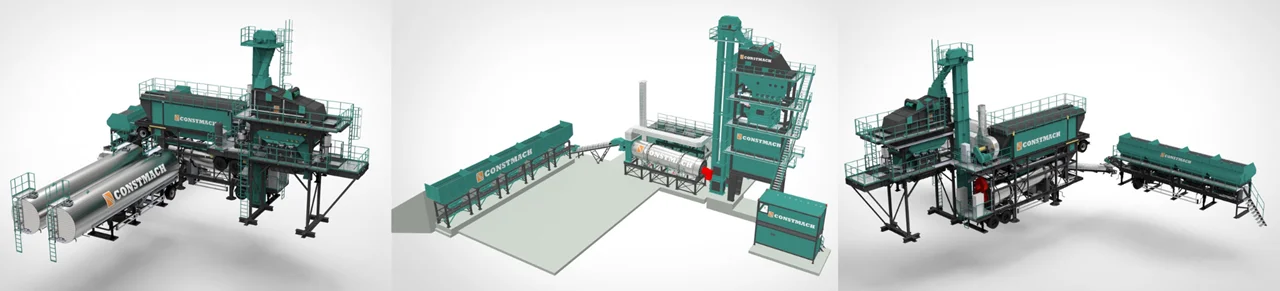
A complete asphalt plant brings together the following components, each of which deserves its own detailed treatment:
- Cold feed bins
- Drying drum and burner
- Dust collection system
- Hot elevator
- Screening unit
- Hot bins and weigh hoppers
- Mixer
- Bitumen tanks
- Filler silo
- Hot mix storage silo
- Control system
How each of these works, and what to look for in each one, is a subject of its own rather than a footnote to the process.
Where Is Plant-Produced Asphalt Used?
Plant-produced hot mix asphalt surfaces highways, city streets, rural roads, parking areas and airport pavements. Highways and airfields sit at the demanding end, with strict mix specifications and continuous paving that only a well-run plant can feed, while municipal and commercial work draws on the same plants for smaller, more varied orders.
Increasingly the plant is also where old roads return. Milled asphalt from resurfacing projects, known as reclaimed asphalt pavement (RAP), is routinely fed back into production, commonly up to about 30 percent of the mix in standard configurations and more with dedicated recycling equipment, turning yesterday's pavement into tomorrow's.
Questions About This Topic

Constmach
Constmach | Concrete Plants & Crushers
The Constmach content team — sharing our 25+ years of manufacturing experience, industry trends, project cases and technical analyses with our readers.
- 25+ years of experience
- Asphalt Plant
- Cement Silo
- Concrete Block Making Machine
- Concrete Batching Plant
- Jaw Crusher
- Mobile Crushing Plant
- Mobile Concrete Batching Plant
- Stone Crusher
Other Articles You May Like

A New Country, A New Milestone: CONSTMACH Expands to Uzbekistan!
We are pleased to announce another important milestone in CONSTMACH’s international growth as Uzbekistan becomes the newest country to join our global network! We have received an order for 2 units of…
A Strong Partnership Continues: MOBILE 120 Shipment to Libya!
CONSTMACH continues to expand its strong presence in the Libyan market with the shipment of another MOBILE 120 Concrete Batching Plant, offering a production capacity of 120 m³/h. Over the years, we h…

CONSTMACH Expands Its Global Presence with New Installations in 2026
2026 marks another important year for CONSTMACH as we continue to expand our international presence and deliver high-quality solutions to customers around the world. Throughout the year, customers fro…