What Is a Vibrating Screen? What Are Its Features and Uses?
A vibrating screen is a machine that separates crushed material into different particle sizes. Rotating eccentric weights or vibrating motors shake a sloped screen box, so particles smaller than the mesh openings fall through each deck while larger ones travel across and discharge separately. With 2 to 4 decks, one screen can produce 3 to 5 sized products. Vibrating screens are essential in mining, aggregate production, crushing plants and recycling.
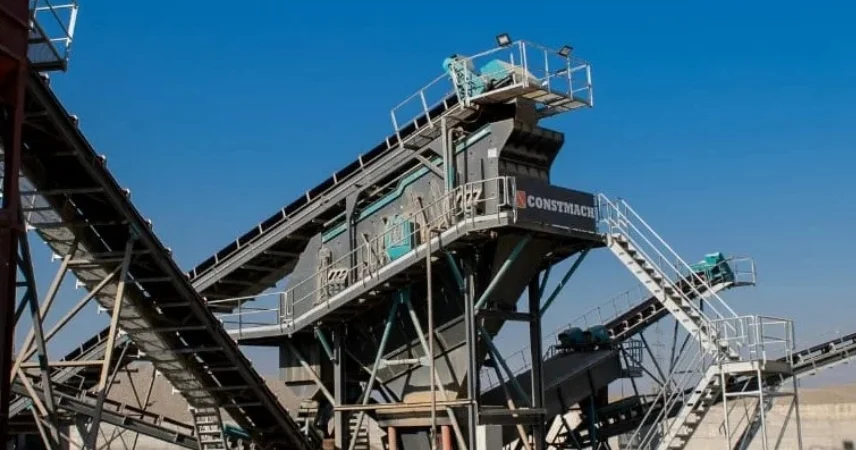
Every crushing and screening plant has a machine whose only job is sorting: the vibrating screen. Crushers reduce rock, but it is the screen that turns a mixed stream of particles into sellable, sized products, and its settings decide how much of that stream ends up where it should.
The machine itself looks simple, a shaking box with mesh decks, yet the physics underneath rewards understanding. Angle, motion type, stroke and screen media each change what passes and what does not, which is why the same basic machine appears in so many different forms across quarries, mines and recycling yards.
What Is a Vibrating Screen?
A vibrating screen is a machine that separates granular material into different particle sizes by shaking it across one or more mesh decks. Particles smaller than the mesh openings fall through as undersize, while larger particles travel along the surface and discharge separately as oversize.
Screening is the counterpart of crushing. A crusher changes particle size; a screen does not change anything, it only classifies what arrives. In a typical plant the two alternate: material is crushed, screened into fractions, and anything still too large returns to the crusher in a closed circuit.
One machine can produce several products at once. Each deck carries a different mesh opening, arranged from coarsest on top to finest at the bottom, so a single feed stream leaves the screen as three, four or five separate sized products depending on the number of decks.
How Does a Vibrating Screen Work?
A vibrating screen works by converting rotation into controlled shaking. Eccentric weights on a rotating shaft, or a pair of counter-rotating vibrating motors, generate centrifugal force that throws the screen body and the material on it in a repeating pattern, thousands of small tosses per minute.
Each toss does two things. It moves the material forward along the deck toward the discharge end, and it loosens the bed so particles can rearrange. That rearrangement is called stratification: finer particles sink to the bottom of the bed, coarser ones rise to the top.
Stratification is what makes screening efficient. Once the fine particles reach the deck surface, every toss gives them another chance to meet an opening and pass through. Coarse particles ride the top of the bed, keep moving forward and leave the deck as oversize. A screen that shakes without stratifying is just transporting rock.
Isolation completes the design. The vibrating body sits on coil springs or rubber mounts, so the violent motion of the screen box never reaches the support structure or the plant's steelwork beneath it.
What Are the Key Features of a Vibrating Screen?
The defining features of a vibrating screen are its deck dimensions, the number of decks, the drive that generates vibration, the adjustable motion parameters and the spring or rubber isolation system. Together they set the capacity, the separation range and the accuracy the machine can reach.
In this machine class, screen bodies typically measure about 1.2 to 2.4 metres in width and 4 to 7 metres in length, which gives roughly 5 to 17 m² of screening area per deck. Stationary units commonly handle around 70 to 340 tonnes per hour, and mobile screening plants extend the class to about 600 t/h at the top end.
Drive power is modest for the tonnage involved. Single-drive machines typically run motors of about 7.5 to 22 kW, with larger bodies using twin drives. Separation sizes span roughly 1 to 130 mm on conventional decks, and maximum feed lumps of around 300 mm are common on scalping configurations.
The working parameters are deliberately adjustable. Inclination, rotation speed and stroke can each be tuned to the material, which is why one screen model serves limestone one year and recycled concrete the next: the machine is recalibrated, not replaced.
What Are the Types of Vibrating Screens?
Vibrating screens are classified by their deck angle, their motion type and the job they are built for. The main types are:
- Inclined (circular-motion) screens: the most common general-purpose type, working at 15 to 30 degrees with a circular throw.
- Horizontal screens: flat or nearly flat decks at 0 to 5 degrees using linear or elliptical motion, chosen for accuracy and low headroom.
- Banana (multi-slope) screens: a curved deck that starts steep, up to about 45 degrees, and flattens toward discharge for high throughput.
- Dewatering screens: linear-motion screens that drain water from fine material rather than sizing it.
- High-frequency screens: fine-separation machines that apply vibration directly to the screen media.
- Grizzly screens: heavy bar decks that scalp coarse feed ahead of the primary crusher.
Rotary trommels and roller screens perform similar sorting work but do not belong to this family, because they rotate or roll the material instead of vibrating a deck.
Inclined Vibrating Screens
The inclined screen is the workhorse of aggregate production. Its deck slopes at 15 to 30 degrees, a single eccentric shaft gives the body a circular throw with a typical stroke of 8 to 12 mm at around 700 to 1,000 rpm, and gravity does part of the conveying work. The design is mechanically simple, tolerant of varied feed and easy to maintain, which explains how widely it is used.
Horizontal Vibrating Screens
Horizontal screens run at 0 to 5 degrees and rely entirely on their linear or elliptical motion, with strokes typically between 14 and 20 mm, to move material. Particles stay on the deck longer than on an inclined screen, which improves separation accuracy, and the flat profile suits plants where installation height is limited, mobile equipment above all.
Banana (Multi-Slope) Screens
A banana screen curves through several slope segments, steep near the feed end and nearly flat at discharge. The steep start thins the bed quickly so fine material passes early, and the flatter end gives near-size particles the time they need. The result is markedly higher throughput from the same deck area, which is why high-tonnage mining circuits favour the shape.
Dewatering Screens
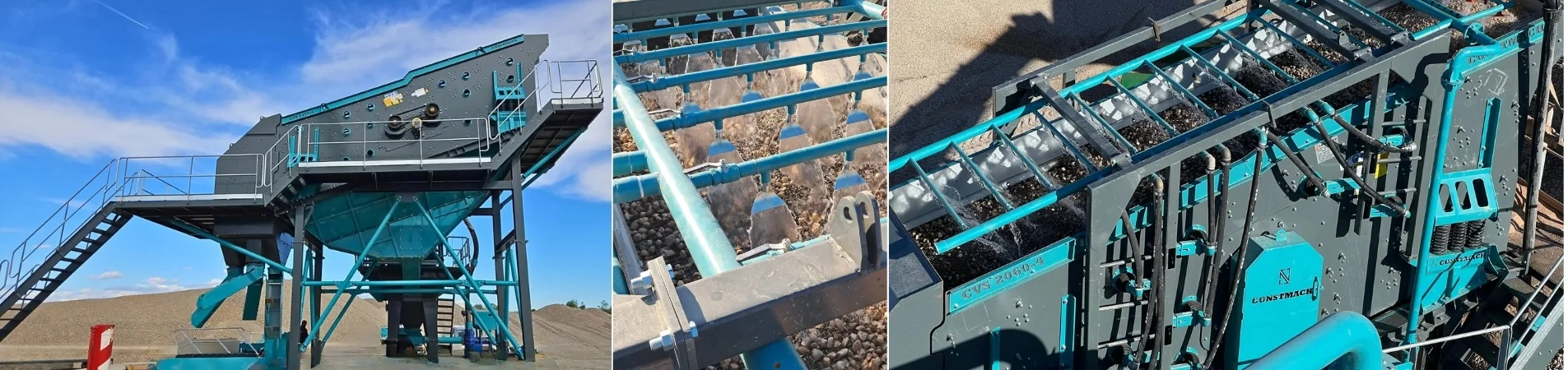
A dewatering screen removes water instead of classifying by size. Counter-rotating motors drive a linear motion at roughly 5 to 6 G and 1,000 to 1,500 rpm, the deck rises slightly toward discharge, and a weir holds back a deep bed of material that acts as its own filter. Washed sand typically leaves a dewatering screen dry enough to convey, stack and sell directly.
High-Frequency Screens
High-frequency screens separate fine material that conventional decks handle poorly. Instead of shaking the whole body, the vibration, typically in the 3,600 to 5,000 rpm range, is applied directly to the screen media, keeping fine apertures open and productive at separations down toward 100 microns.
Grizzly Screens
The grizzly screen guards the primary crusher. Its deck is a set of parallel wear-resistant bars with openings of 50 to 300 mm rather than mesh, built to take blasted rock straight from the truck. Fines and mid-size material drop through and bypass the crusher, so the machine only works on rock that actually needs crushing.
What Is the Difference Between Circular, Linear and Elliptical Motion?
The motion type describes the path the screen body traces in each vibration cycle: a circle, a straight line or an ellipse. Circular motion comes from a single eccentric shaft, linear motion from twin shafts or counter-rotating motors whose forces cancel except along one axis, and elliptical motion combines the two behaviours.
Each path suits a different deck angle. Circular motion needs an inclined deck, because the throw alone does not convey material efficiently on the flat. Linear motion pushes material forward by itself, which is what lets horizontal and dewatering screens work at little or no slope.
Elliptical motion sits between the two, pairing the aggressive toss of a circle with the conveying ability of a line. On horizontal screens it keeps material moving while preserving the accuracy that comes from a longer time on the deck. In practice the motion type is fixed by the machine's drive design, so it is chosen when the screen is specified, not adjusted afterwards.
What Is Screen Media and What Is It Made Of?
Screen media is the replaceable surface the material actually touches: the mesh, panels or plates that carry the openings. The main options are woven wire mesh, polyurethane panels, rubber panels and perforated steel plate, and the choice affects wear life, open area and noise more than any other component.
Woven wire offers the largest open area for a given opening size, which makes it the accuracy-and-throughput choice for dry, moderately abrasive material. Polyurethane panels resist abrasion and suit wet screening, where they outlast wire many times over. Rubber absorbs impact from coarse, sharp feed and runs noticeably quieter. Perforated plate handles heavy scalping duty where anything lighter would be destroyed.
Because media mounts in standard panels or tensioned sections, a screen can change personality without changing machines. The same deck that carries scalping plate this season can carry fine polyurethane the next, following the plant's product mix.
How Many Decks Can a Vibrating Screen Have?
Vibrating screens typically carry 2 to 4 decks, and each deck adds one product: a screen with n decks separates the feed into n+1 sized fractions. A two-deck machine makes three products, a three-deck machine four, and a four-deck machine five.
Deck order follows one rule: coarsest opening on top, finest at the bottom. The top deck shields the finer meshes below from heavy lumps and takes most of the wear, which is also why it is usually the first surface to be replaced.
More decks are not automatically better. Every added deck deepens the machine, complicates media access and splits the same screening area across more separations, so plants specify the deck count from the number of products they actually sell rather than from what the frame could carry.
Where Are Vibrating Screens Used?
Vibrating screens are used wherever granular material must be sorted by size: mining and ore processing, aggregate and sand production, crushing and screening plants, recycling of construction and demolition waste, coal handling and industrial minerals. Lighter variants serve the chemical and food industries as well.
In aggregate production the screen defines the product list. Concrete and asphalt specifications demand tight gradations, and every fraction a quarry sells, from fine sand to railway ballast, exits through a screen deck sized for it.
Mining circuits lean on screens twice: grizzlies and scalpers protect the primary crusher at the front of the plant, while banana and horizontal screens split the crushed stream and close the circuit, sending oversize back for another pass. Dewatering screens then dry the washed fine products for transport.
Recycling has become the fastest-changing application. Crushed concrete, brick and asphalt arrive mixed and irregular, and screening separates the reusable fractions from contamination. The same stratification physics that sorts virgin rock in a quarry sorts demolition waste in a city yard, which is a fair measure of how universal the machine has become.
Questions About This Topic
Constmach
Constmach | Concrete Plants & Crushers
The Constmach content team — sharing our 25+ years of manufacturing experience, industry trends, project cases and technical analyses with our readers.
- 25+ years of experience
- Asphalt Plant
- Cement Silo
- Concrete Block Making Machine
- Concrete Batching Plant
- Jaw Crusher
- Mobile Crushing Plant
- Mobile Concrete Batching Plant
- Stone Crusher
Other Articles You May Like

A New Country, A New Milestone: CONSTMACH Expands to Uzbekistan!
We are pleased to announce another important milestone in CONSTMACH’s international growth as Uzbekistan becomes the newest country to join our global network! We have received an order for 2 units of…
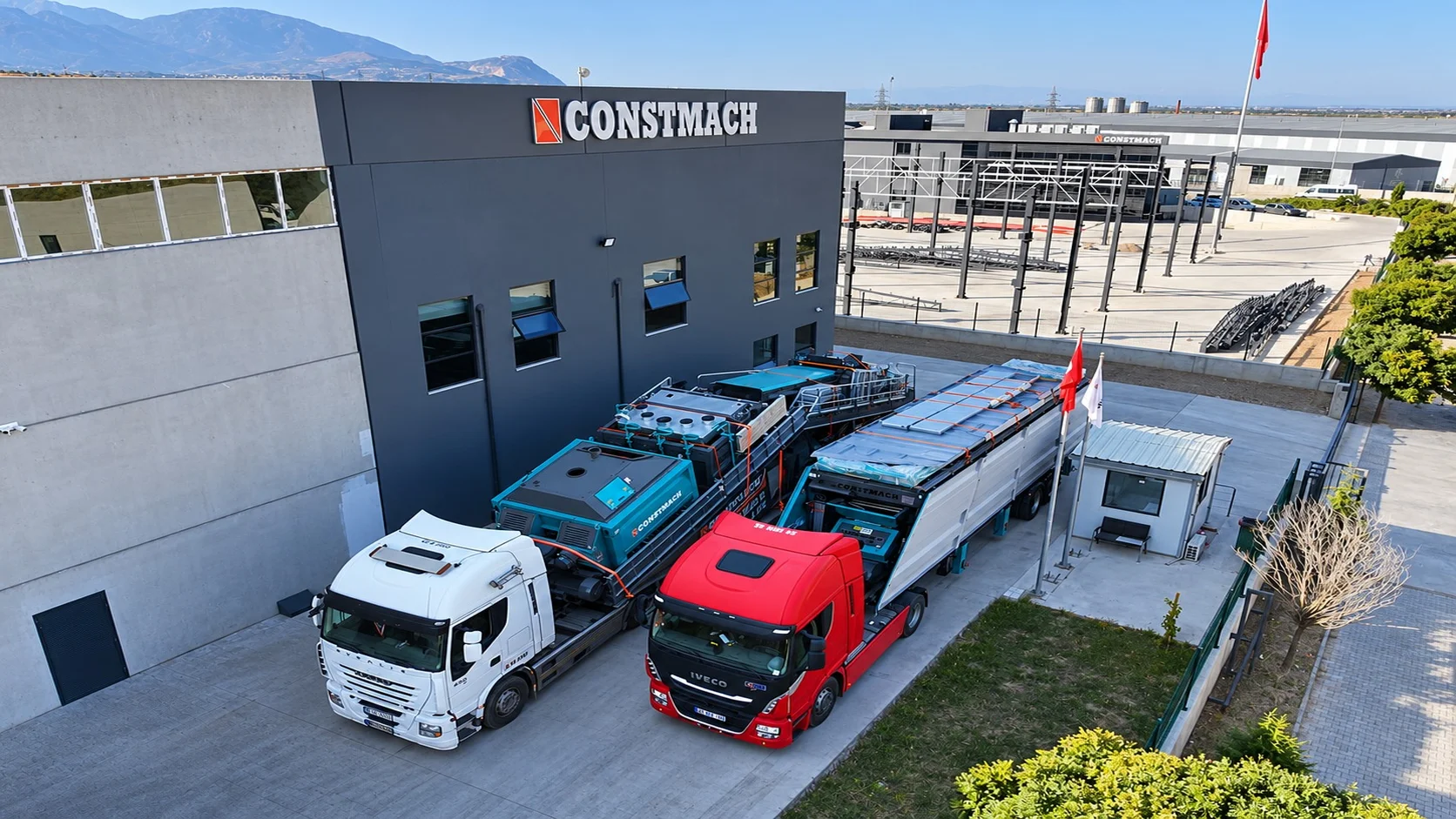
A Strong Partnership Continues: MOBILE 120 Shipment to Libya!
CONSTMACH continues to expand its strong presence in the Libyan market with the shipment of another MOBILE 120 Concrete Batching Plant, offering a production capacity of 120 m³/h. Over the years, we h…

CONSTMACH Expands Its Global Presence with New Installations in 2026
2026 marks another important year for CONSTMACH as we continue to expand our international presence and deliver high-quality solutions to customers around the world. Throughout the year, customers fro…