What Is a Concrete Batching Plant? What Are Its Types and Uses?
A concrete batching plant is a facility that weighs aggregates, cement, water and admixtures according to a mix design and mixes them into ready-to-use concrete. The main types are stationary, mobile, compact and containerized plants, built as wet batch (central mixer) or dry batch systems. They supply ready-mix producers, infrastructure and building projects, precast factories and industrial facilities such as airports and ports.
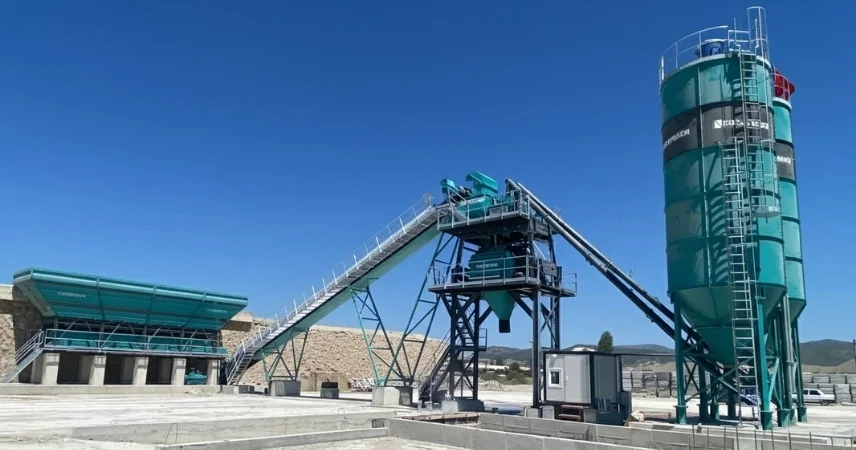
A concrete batching plant, also called a concrete batch plant or concrete mixing plant, stands at the start of almost every construction project. It turns aggregates, cement, water and admixtures into ready-to-use concrete in precisely weighed batches, and it does so hundreds of times a day at a busy production site.
The scale involved is enormous. The world places around 14 billion cubic metres of concrete every year according to the Global Cement and Concrete Association (2021), and nearly all of it passes through a batching plant of some kind, from compact trailer-mounted units to permanent installations feeding entire cities.
What Is a Concrete Batching Plant?
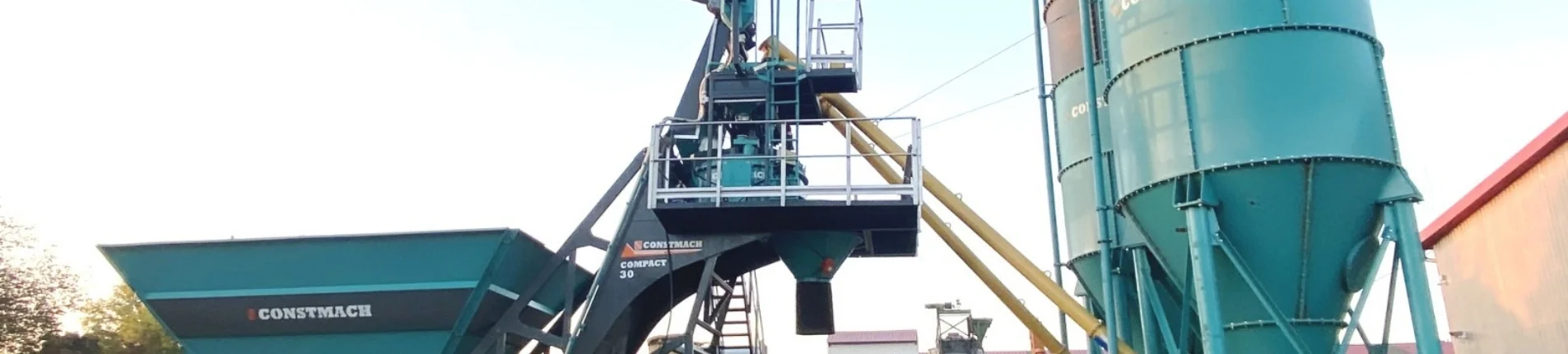
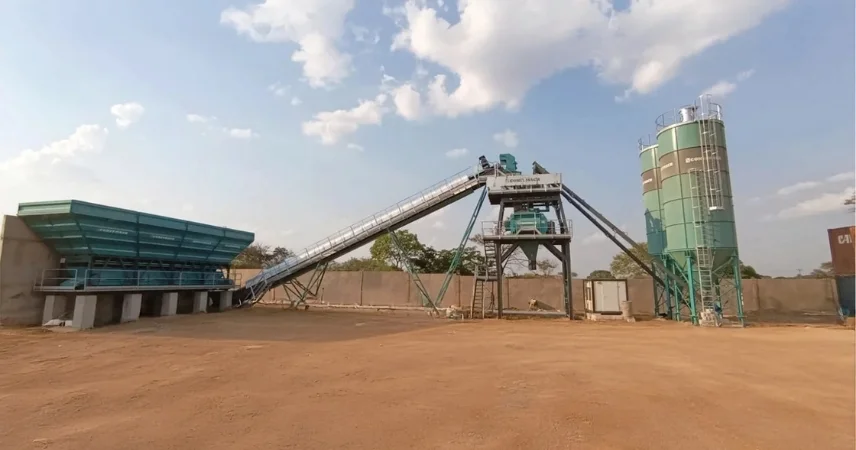
A concrete batching plant is a facility that weighs aggregates, cement, water and chemical admixtures according to a mix design and combines them into fresh concrete of consistent, repeatable quality. Its main components are aggregate bins, cement silos, weigh hoppers with load cells, conveyors, a mixer and a control system.
Each component has one clear job. Aggregate bins, usually divided into 2 to 6 compartments, store the different sand and stone fractions separately. Cement silos hold the binder; a single plant typically carries 1 or 2 silos, and capacities run from about 50 tonnes to several thousand tonnes per silo on large sites.
Weigh hoppers suspended on load cells measure every ingredient by mass. Belt conveyors, typically 24 to 48 inches wide, or skip hoists carry the weighed aggregate to the mixer, while screw conveyors feed cement from the silo. Water and liquid admixtures pass through calibrated meters on their way in.
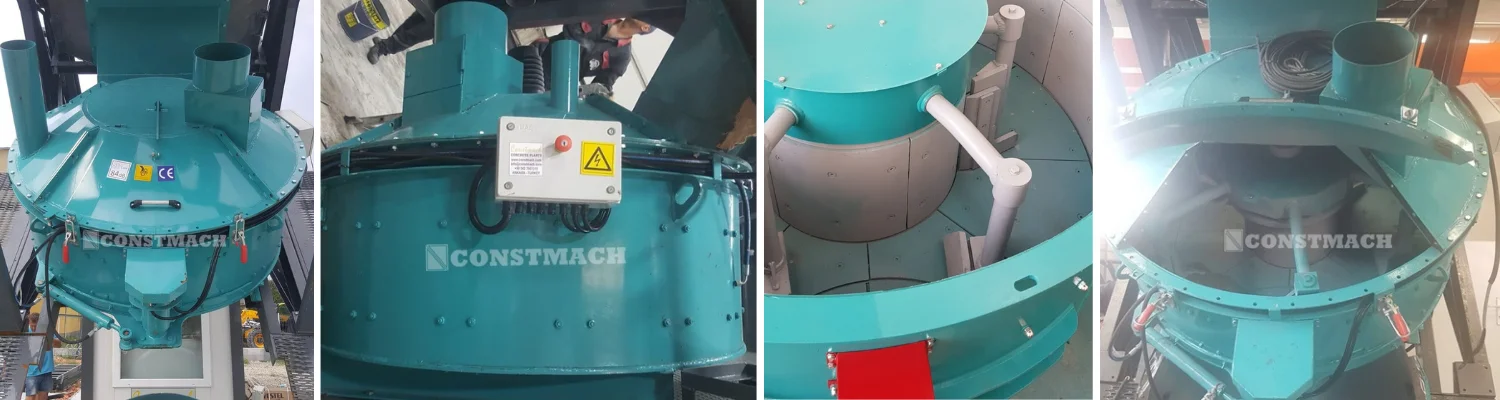
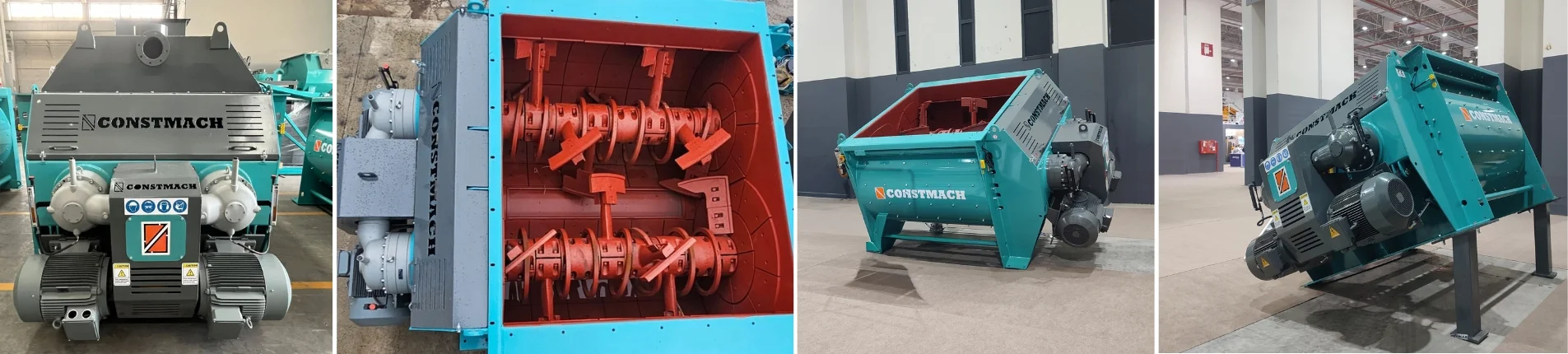
The mixer is the heart of the plant. It blends the weighed materials into a homogeneous mass before discharge into a transit mixer or a concrete pump. A PLC-based control system coordinates the whole sequence: it stores mix recipes, executes the weighing automatically and logs every batch produced.
How Does a Concrete Batching Plant Work Step by Step?
A batching plant works in four steps: it stores raw materials, weighs each ingredient according to the mix design, mixes them into homogeneous concrete, and discharges the batch into a truck or pump. A full cycle in a modern twin-shaft plant takes roughly 60 to 90 seconds.
Storage comes first. A loader or an inclined conveyor keeps the aggregate compartments filled, cement arrives by bulk tanker and is blown into the silo, and admixtures wait in dosing tanks beside the plant.
Weighing is where quality is decided. The control system opens each bin gate in sequence and the load cells under the weigh hopper record the exact mass. Standards such as ASTM C94 expect ingredients to be measured by mass rather than volume, because moisture in the sand changes its volume from hour to hour.
Mixing follows. The weighed aggregate, cement, water and admixture enter the mixer together and are blended until the batch is uniform. A twin-shaft mixer reaches about 95 percent homogeneity in around 30 seconds, which is why practical mixing time in most plants sits between 60 and 90 seconds including charging. For central-mix plants, ASTM C94 sets a minimum of 1 minute for the first cubic yard plus 15 seconds for each additional cubic yard.
Discharge closes the cycle. The mixer empties into a transit mixer, a concrete pump or a bucket, the control system records the batch, and the next weighing sequence begins. On a well-run plant the steps overlap, so weighing for the next batch happens while the current one is still mixing.
What Are the Main Types of Concrete Batching Plants?
Concrete batching plants are classified along two independent axes: how they are installed and how they mix. The main types are:
Stationary concrete batching plants: bolted to permanent foundations for long-term, high-output production sites.
Mobile concrete batching plants: the complete production line on a single towable chassis, built to move between job sites.
Compact concrete batching plants: pre-assembled modules that install in days and fit into small footprints.
Containerized concrete batching plants: plant modules packed into standard ISO containers for economical worldwide shipping.
Wet batch (central mix) plants: all ingredients, including water, are fully mixed in a stationary mixer at the plant.
Dry batch (transit mix) plants: weighed dry materials and water are loaded into the truck drum, where the mixing takes place.
The installation type answers where and how long the plant will work. The mixing method answers where the concrete is actually blended, in the plant or in the truck. A stationary plant can be wet or dry; a mobile plant can be wet or dry as well, so the two choices are genuinely separate.
Stationary Concrete Batching Plants
Stationary concrete batching plants are bolted to prepared foundations and built for permanent production sites. They deliver the highest outputs and the widest configuration options of any plant type, with commercial models commonly available from about 30 up to 240 m³/h.
Their strength is scale and stability. Large aggregate storage, multiple cement silos, high-capacity mixers and double-mixer configurations all belong to stationary territory. Ready-mix producers supplying a city, precast factories and long-running industrial projects choose them for exactly those reasons.
The trade-off is permanence. A stationary plant needs cured concrete foundations before erection, and installation typically takes a week or more of assembly work on top of that. Moving one later is possible but slow and costly, so the location decision matters from day one.
Mobile Concrete Batching Plants
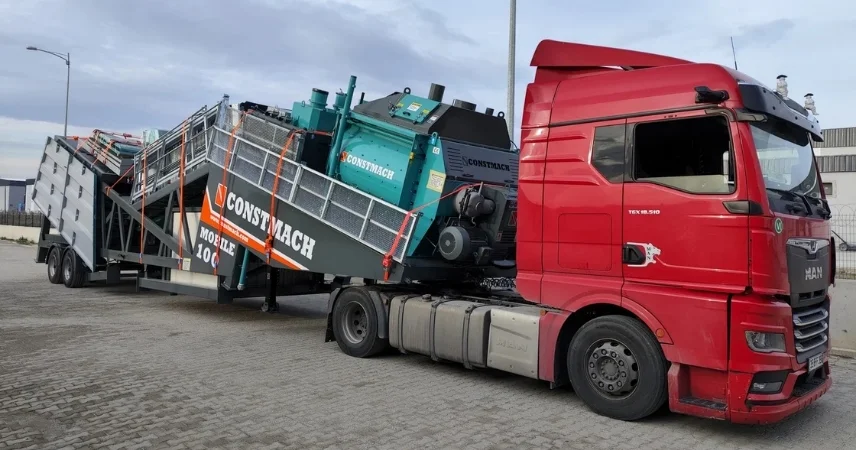
Mobile concrete batching plants put the complete production line, from aggregate bins to the mixer, on a single towable chassis. They are designed to move between job sites with minimal disassembly, and typical capacities run from about 30 to 150 m³/h.
A common question is whether a mobile plant sacrifices concrete quality. It does not. A mobile unit carries the same mixer technology as a stationary plant, weighs by mass the same way and runs the same control software; what changes is the frame underneath, not the batching process.
Installation speed is the headline advantage. Published figures for mobile plants range from a single working day to about nine days depending on size and site readiness. On job sites the foundation and utility works, not the plant erection itself, usually drive the overall schedule.
At the small end of the class sit road-legal ultra-compact units in the 45 m³/h range, built on short trailers light enough for standard trucks to tow without special permits. Road, dam and infrastructure contractors, whose work moves every one to three years, are the natural users of the whole mobile category.
Compact and Containerized Concrete Batching Plants
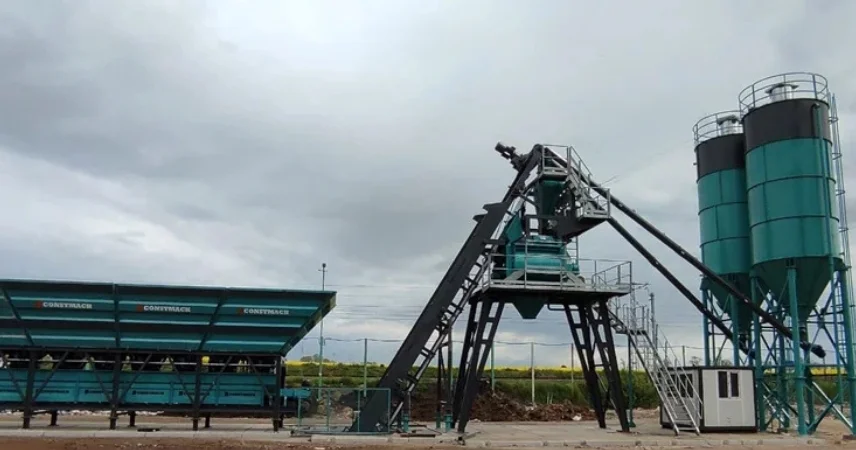
Compact plants arrive in large pre-assembled modules that crane together in days, need noticeably less space than a full stationary installation, and still use the same mixer types. A mid-size compact plant in the 60 m³/h class can fit into roughly 300 m² of ground.
They suit producers who want stationary-style production without a sprawling site: urban batching locations, mid-volume precast yards and plants placed inside existing industrial facilities. Erection measured in days rather than weeks also shortens the financing gap between purchase and first production.
Containerized plants take modularity one step further and pack the weighing, mixing, storage and control modules into standard ISO containers. They need little or no concrete foundation and travel economically by truck, rail or sea.
That shipping economy is why containerized plants dominate remote and international projects: a mining site far from infrastructure, an island project or a plant relocating between countries can receive the whole factory as a set of standard containers and commission it quickly.
What Is the Difference Between Dry Batch and Wet Batch Plants?
In a wet batch (central mix) plant, all ingredients including water are fully mixed in a stationary mixer at the plant, and the truck only agitates the ready concrete on the road. In a dry batch (transit mix) plant, weighed dry materials and water are loaded into the truck drum, and the mixing itself happens in the truck.
The difference sounds small and is not. After a central mixer has done its work, the transit mixer drum turns at just 2 to 4 RPM to keep the load alive. A dry-batch load instead needs the drum at full mixing speed, 12 to 15 RPM, for roughly 70 to 100 revolutions before the batch is homogeneous.
Industry comparisons consistently report tighter strength consistency from wet batching, and the gap matters most in precast work and high-strength mixes in the 5,000 to 8,000 psi range. Dry batching remains a legitimate choice for standard ready-mix work: the plant is simpler because there is no plant mixer, it loads trucks quickly, and it suits long hauls where concrete mixed too early would lose workability.
CriteriaWet batch (central mix)Dry batch (transit mix) Where mixing happensIn the plant's stationary mixerIn the truck drum Truck drum speed2-4 RPM (agitation only)12-15 RPM for 70-100 revolutions Quality consistencyHigher, batch to batchMore variation between loads Plant equipmentIncludes a central mixerNo plant mixer Typical usePrecast, high-strength, pavingStandard ready-mix, long hauls
Dust behaviour differs too. Loading dry cement into a truck generates visibly more dust than charging a sealed central mixer, so dry plants lean harder on their filtration and dust-collection systems to meet site and environmental requirements.
Where Are Concrete Batching Plants Used?
Concrete batching plants supply five broad markets: commercial ready-mix production, infrastructure projects such as highways, bridges, tunnels and dams, residential and commercial building construction, precast concrete factories, and industrial facilities including airports and ports. The plant type follows the market.
Commercial ready-mix producers run stationary wet-batch plants close to cities and feed fleets of transit mixers; most of the concrete the industry delivers each year moves through exactly this channel. Ready-mix concrete is a market that GMI estimated at $815 billion in 2024, with other research houses using narrower definitions reporting values around $500 to 544 billion; either way the direction is growth.
Infrastructure contractors take mobile and containerized plants to the work. A dam or motorway project pours enormous volumes for two or three years and then moves, which is precisely the mobile plant's design case. Highway agencies pouring continuous pavement pair central-mix plants with slip-form pavers, because paving concrete is stiff, placed fast and unforgiving of batch-to-batch variation.
Residential and commercial builders draw on both channels: city projects buy from nearby ready-mix plants, while large developments sometimes justify a dedicated on-site unit. Precast factories run pan or planetary mixers on tight cycles to cast pipes, panels and paver blocks indoors, where mix precision and short batch times matter more than raw hourly output.
Airports, ports and energy projects sit at the demanding end: large volumes, strict specifications and often remote locations. This is where containerized and high-capacity stationary plants meet, sometimes on the same project, with the containerized unit starting production while the permanent installation is still being erected.
Questions About This Topic

Constmach
Constmach | Concrete Plants & Crushers
The Constmach content team — sharing our 25+ years of manufacturing experience, industry trends, project cases and technical analyses with our readers.
- 25+ years of experience
- Asphalt Plant
- Cement Silo
- Concrete Block Making Machine
- Concrete Batching Plant
- Jaw Crusher
- Mobile Crushing Plant
- Mobile Concrete Batching Plant
- Stone Crusher
Other Articles You May Like
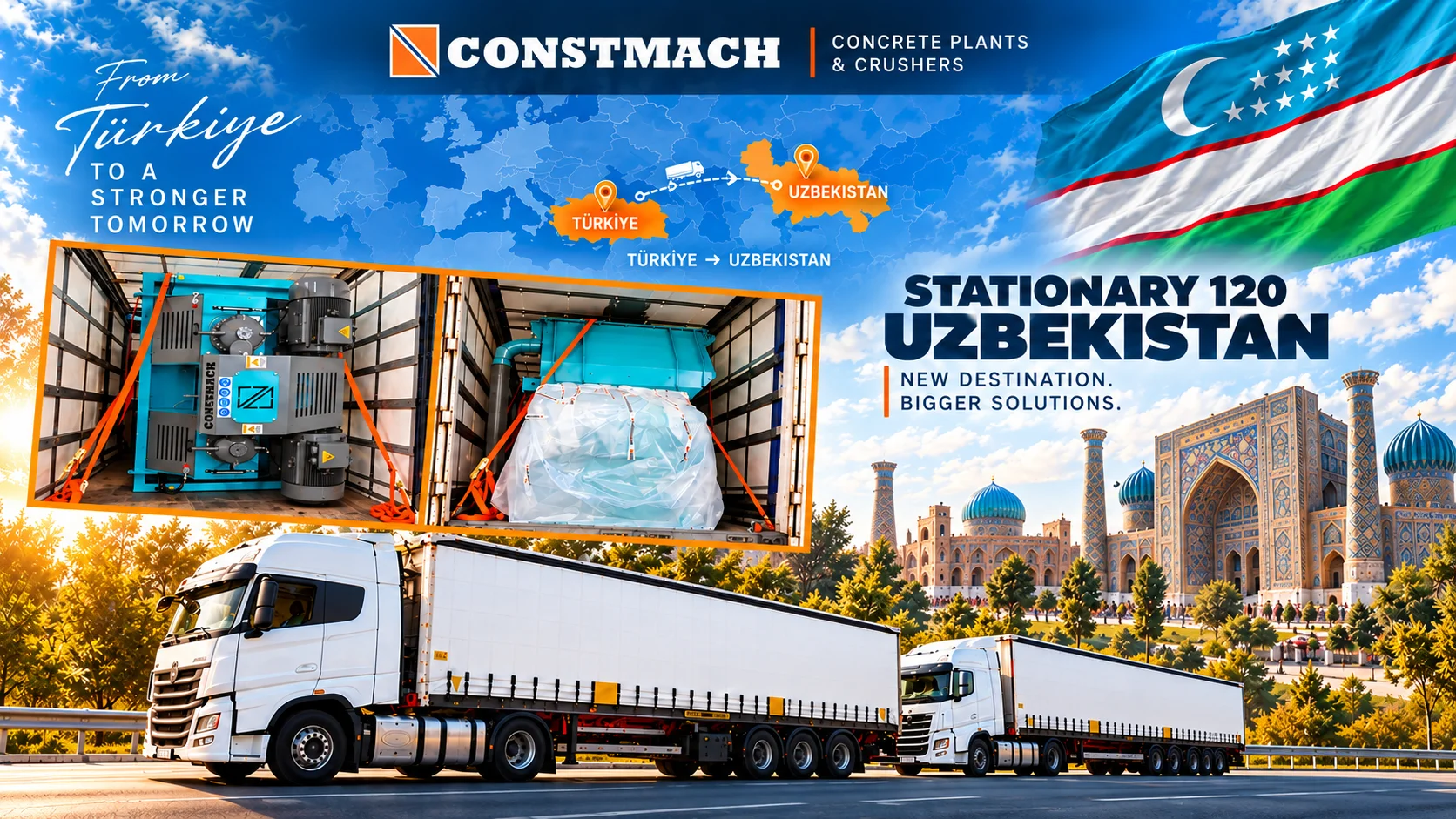
A New Country, A New Milestone: CONSTMACH Expands to Uzbekistan!
We are pleased to announce another important milestone in CONSTMACH’s international growth as Uzbekistan becomes the newest country to join our global network! We have received an order for 2 units of…
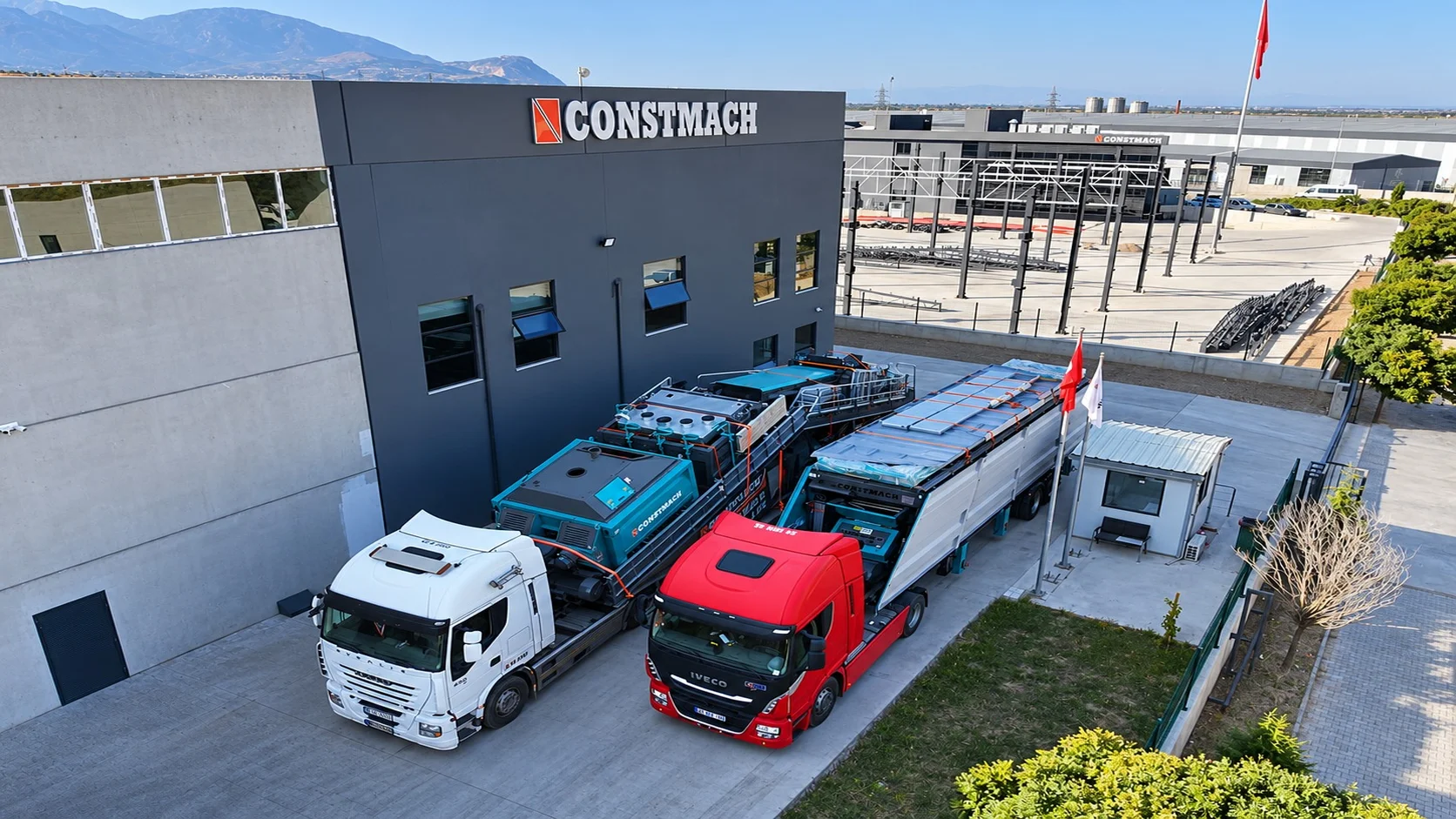
A Strong Partnership Continues: MOBILE 120 Shipment to Libya!
CONSTMACH continues to expand its strong presence in the Libyan market with the shipment of another MOBILE 120 Concrete Batching Plant, offering a production capacity of 120 m³/h. Over the years, we h…
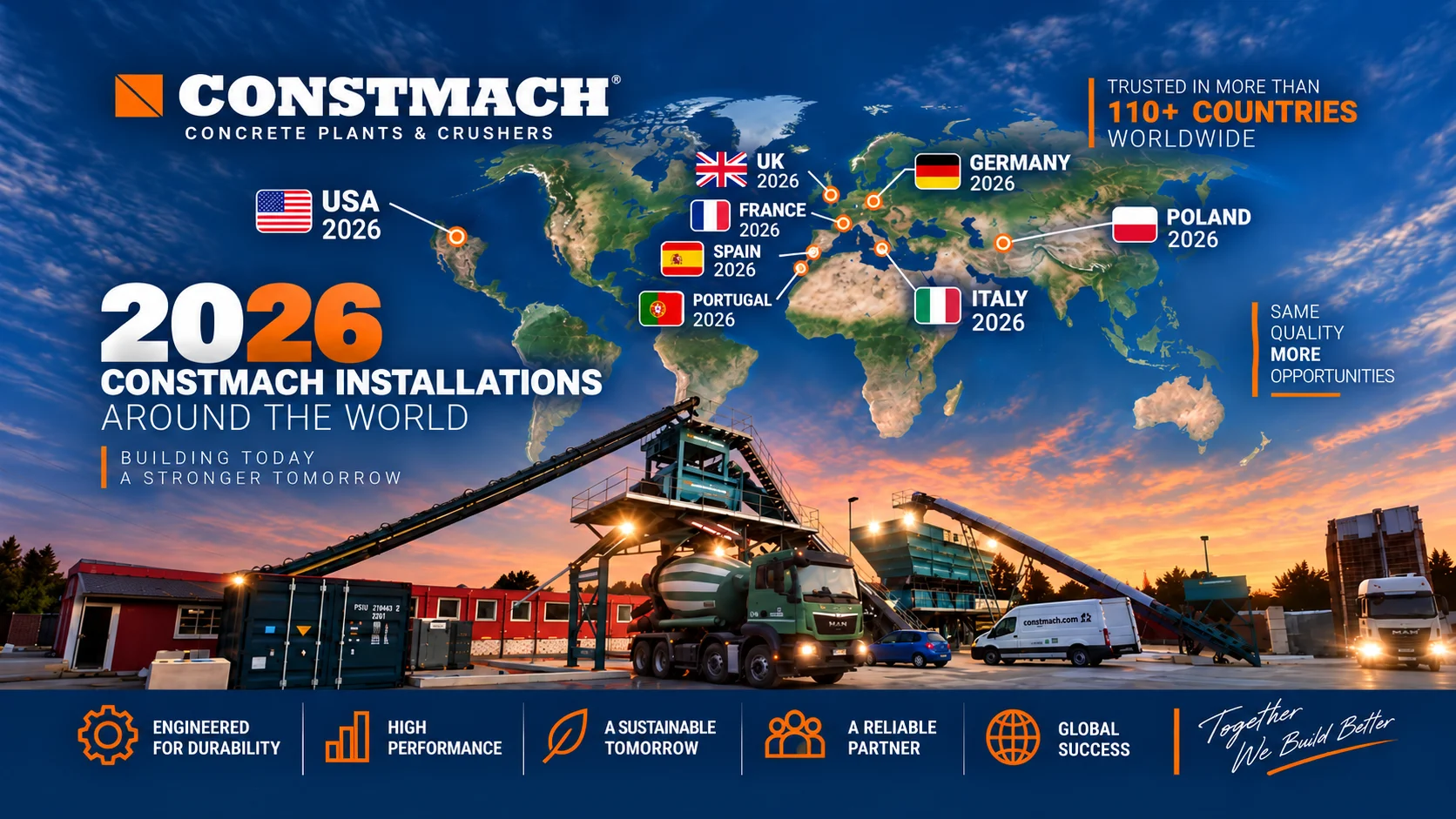
CONSTMACH Expands Its Global Presence with New Installations in 2026
2026 marks another important year for CONSTMACH as we continue to expand our international presence and deliver high-quality solutions to customers around the world. Throughout the year, customers fro…