Constmach gravel washing systems remove clay, silt and fine contamination from sand and gravel so the finished aggregate meets the cleanliness specifications that concrete and asphalt demand. The range spans mobile screening and washing plants, screw sand washers, bucket-wheel sand washers and dewatering screens with hydrocyclones, used singly or combined into a full washing circuit. This page explains each type and when to use it.
What a Gravel Washing System Actually Does
Raw sand and gravel rarely arrive clean. Pit-run and dredged feed carry clay coatings, silt and dust that cling to the grains and sit between them. Those fines look harmless, but they swell, absorb water and break the bond between cement paste or bitumen and the aggregate surface. A washing system scrubs that contamination loose, separates it from the saleable product, and discharges aggregate that is graded, clean and ready to sell.
There are two distinct jobs inside any washing line. The first is scrubbing: physically attacking clay and silt with water, turbulence and grain-on-grain attrition until it lets go of the stone. The second is separation and recovery: getting the freed fines out with the wash water while holding onto the fraction of fine sand you still want to sell. Different machines are built for different points along that path, which is why a complete plant often uses more than one.
Why Clean Aggregate Matters for Concrete and Asphalt
Excess fines and clay are among the most common reasons a mix underperforms. In concrete, clay and silt increase water demand, reduce strength and promote shrinkage cracking. In asphalt, clay-coated aggregate strips under traffic and moisture because bitumen cannot grip a dirty surface. Specifications set hard limits on the amount of material passing the finest sieves and on sand equivalent or methylene blue values for exactly this reason.
Washing is the most reliable way to hit those limits consistently. Dry screening removes oversize and undersize, but it does little against clay that is bonded to the grain. Only water, scrubbing and proper separation strip that contamination away. For a producer selling into ready-mix and asphalt markets, a washing plant is often the difference between meeting a specification and rejecting a stockpile.
The Constmach Washing Range at a Glance
Constmach builds four product families that cover the full range of feed types and duties, from a single wheel-mounted unit for a small pit to a multi-stage circuit at a large quarry. The table below summarises what each does and where it fits.
| Product family | Type | Main job | Best suited to |
|---|
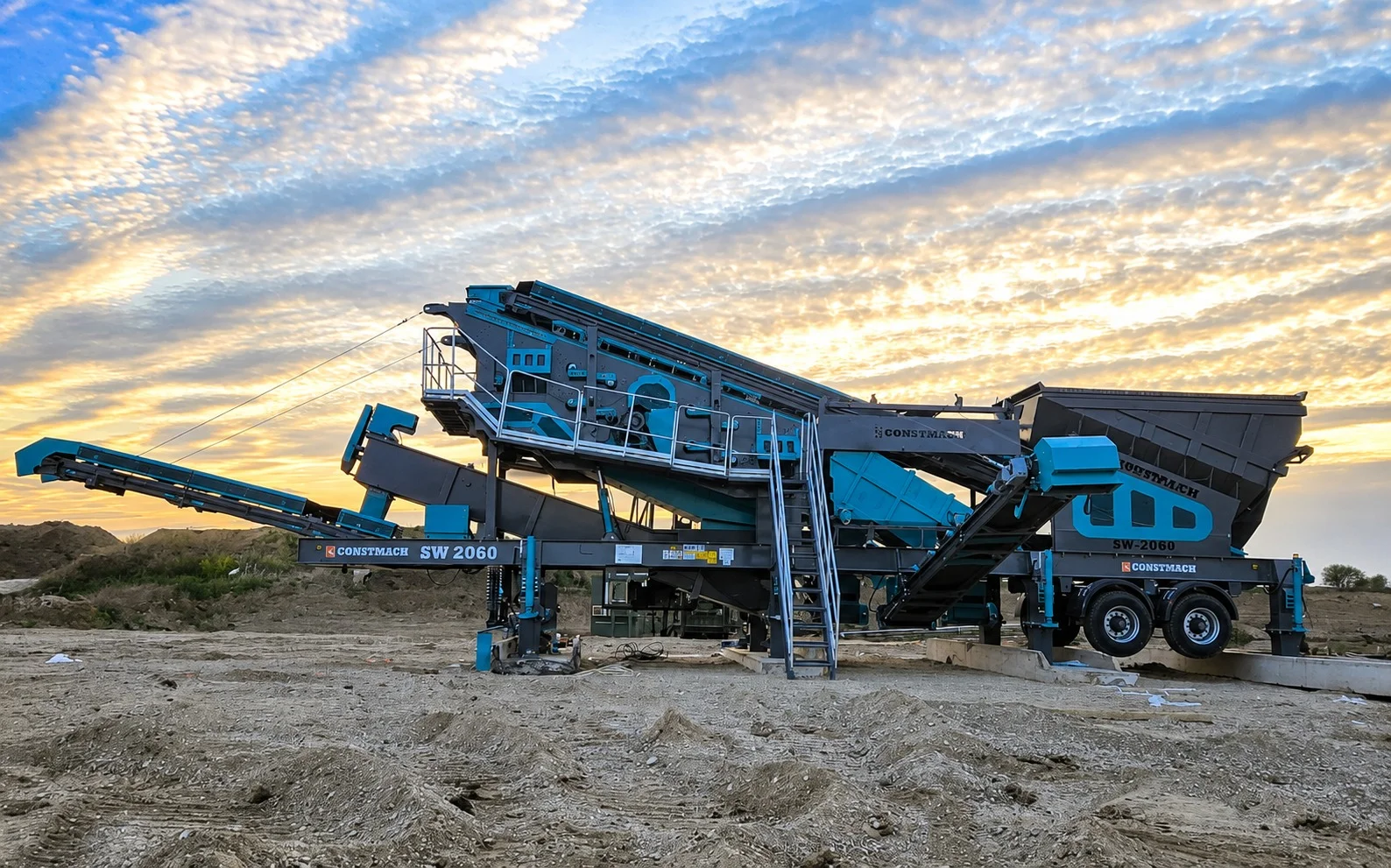
| SW series | Mobile screening and washing plant | All-in-one wheel-mounted screen plus screw washer | Sites needing a fast, relocatable single-unit solution |
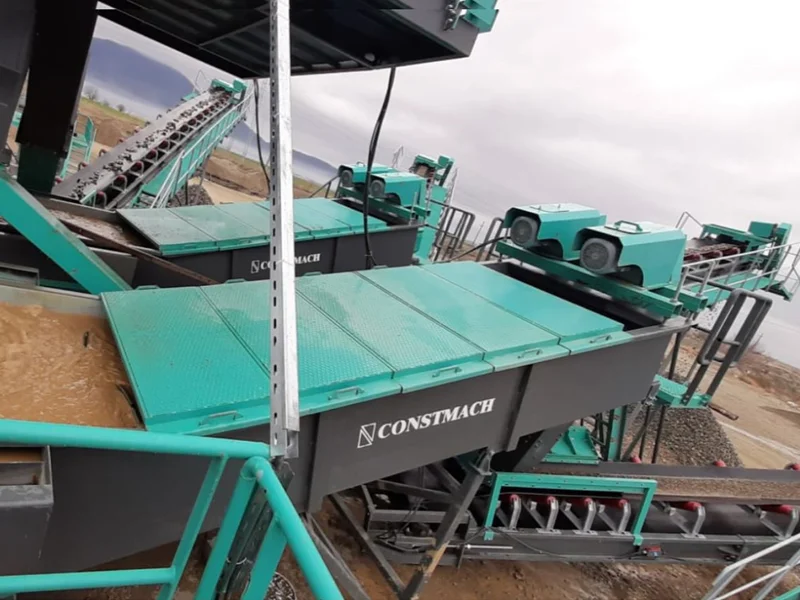
| CSW series | Screw sand washer | Inclined spiral scrubbing and dewatering of 0-5 mm fine sand | Standard sand washing with moderate contamination |
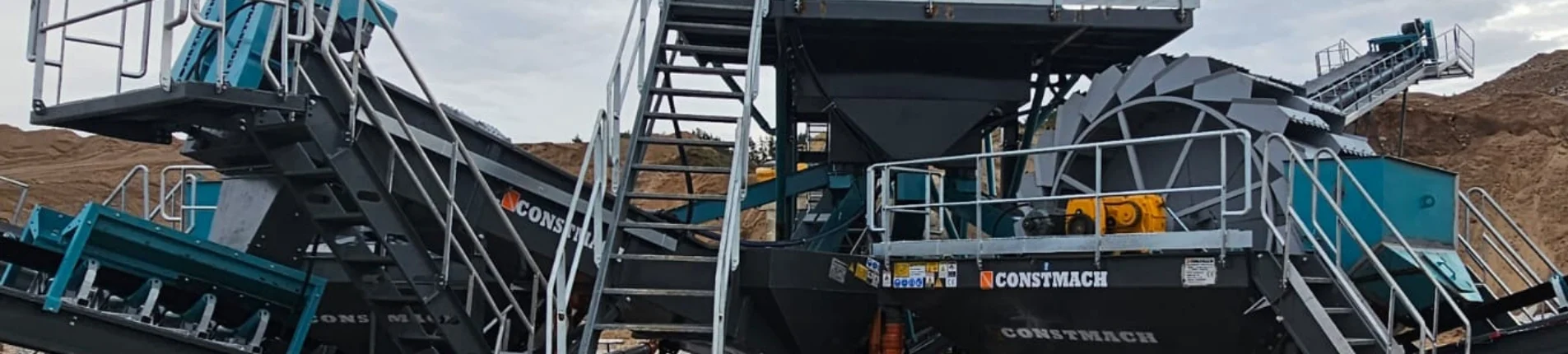
| CBW series | Bucket / wheel sand washer | Rotary bucket-wheel scrubbing and dewatering | High-clay feed where low water and power use matter |
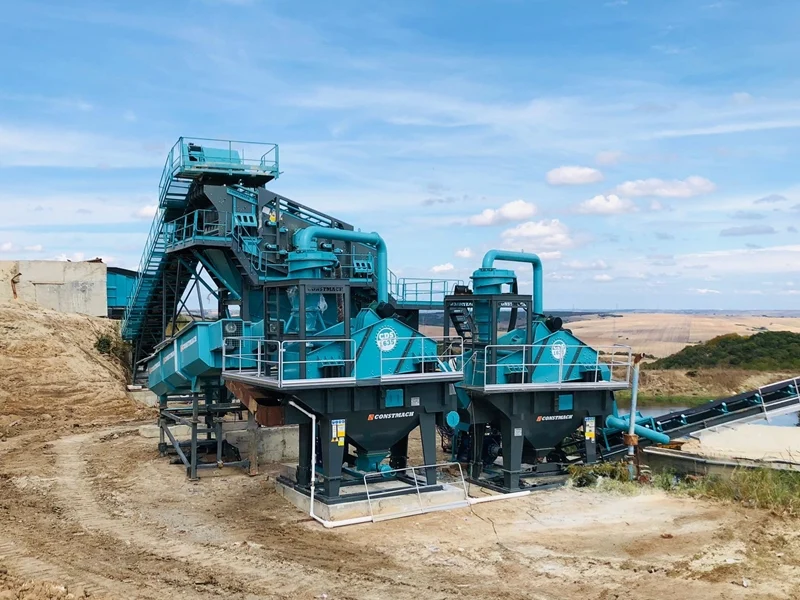
| CDS series | Dewatering screen and hydrocyclone | Remove residual water and recover very fine sand (around 90 micron) | Drier, stackable product and recovery of lost fines |
Mobile Screening and Washing Plants (SW Series)
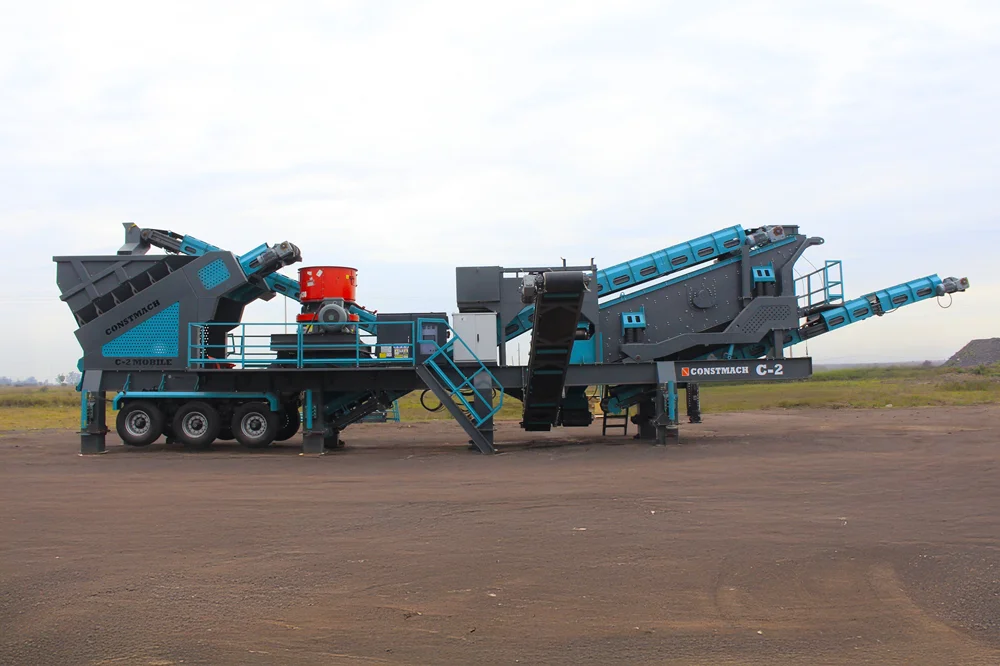
The SW series puts a screen and a screw washer on one wheel-mounted chassis. Feed enters, the screen splits it into size fractions and rejects oversize, and the fine sand fraction passes to the integrated screw washer for scrubbing and dewatering. Because everything sits on one trailer, the plant can be moved between pits or repositioned on site with minimal civil work.
This is the right choice when you want one machine to do the whole job and value mobility over maximum throughput. Contractors working several borrow pits, operators with seasonal demand, and smaller producers who cannot justify a fixed circuit all benefit from the SW approach. It also makes a sensible first washing plant: it proves the market for clean sand before a producer commits to a larger stationary line.
Screw Sand Washers (CSW Series)
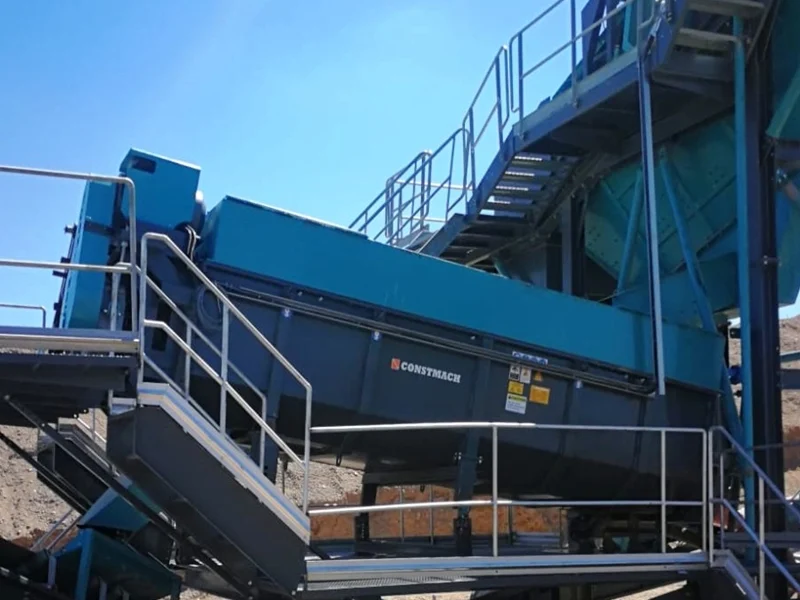
A screw sand washer uses an inclined trough with one or two slow-turning spirals. Sand-laden water enters the low end; the spirals lift the settled sand up the incline against the flow, scrubbing it through attrition while the overflow carries clay, silt and excess water away over a weir. By the time the sand reaches the discharge at the top, it has been both cleaned and partially dewatered.
The CSW series handles fine 0-5 mm sand and is the workhorse of most washing plants. It is simple, tolerant and easy to operate. The trade-off is that the overflow weir tends to flush the finest sand fractions out with the waste. Where that fine fraction has value, or where the product needs to be drier, a screw washer is usually paired with a dewatering stage downstream.
Bucket / Wheel Sand Washers (CBW Series)
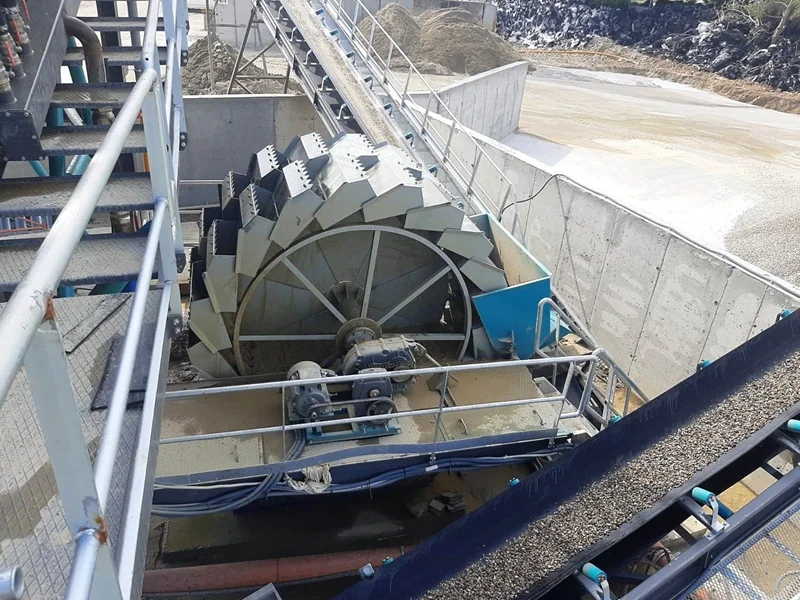
The bucket-wheel, or sand-collecting wheel, washer takes a different route. Sand settles in a tank while a large rotating wheel fitted with perforated buckets dips through the settled bed, lifts the washed sand clear of the water, lets it drain, and discharges it onto a chute or conveyor. The perforations let water and fines drain back into the tank during the lift.
Two things make the wheel washer attractive on difficult feed. It is gentle on the sand, so it loses far less fine material to the overflow than a screw washer does, which means better recovery and a finer product. And it uses noticeably less water and power for the same output. For high-clay feed, or where water is scarce or expensive, the CBW series is often the better scrubbing choice.
Dewatering Screens and Hydrocyclones (CDS Series)
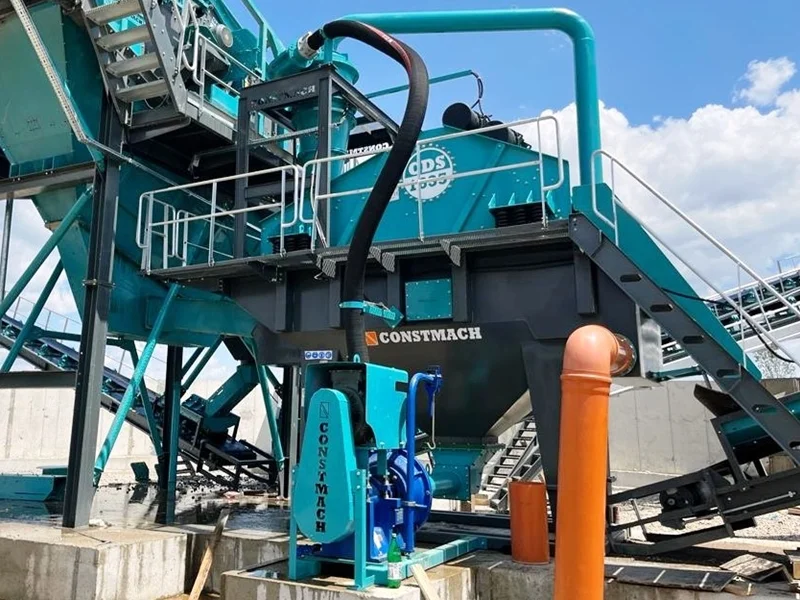
The CDS series is the recovery and drying stage. A hydrocyclone takes the slurry that a washer would otherwise send to waste and uses centrifugal force to recover very fine sand, down to around 90 micron, that simple washers flush away. The recovered sand and water drop onto a high-frequency dewatering screen, which throws off free water and discharges a low-moisture, stackable product that can be loaded almost straight from the screen.
Adding a CDS stage does two valuable things at once. It captures fine sand that would otherwise be lost, increasing saleable tonnage from the same feed. And it produces a drier product, which reduces stockpile drainage time and handling problems. The same cyclone underflow split is what allows water to be cleaned and recycled rather than constantly drawn fresh.
Building a Complete Washing Circuit
The four families are designed to work together. A typical full circuit scrubs first with a washer, screw or wheel depending on the feed, then sends the washer overflow to a dewatering screen and hydrocyclone to recover fines and dry the product. The result is cleaner aggregate, higher yield and a product moisture low enough to sell or stockpile immediately.
- Scrub: a CSW screw washer or CBW bucket-wheel washer strips clay and silt from the sand.
- Recover: a hydrocyclone reclaims very fine sand from the washer overflow that would otherwise go to the pond.
- Dewater: a high-frequency dewatering screen removes free water for a dry, stackable product.
- Recycle: clarified water returns to the plant, cutting fresh-water make-up and pond load.
How many stages you need depends on the feed and the specification. Clean feed and a loose moisture limit may need only a single screw washer. Dirty, high-clay feed sold into a tight concrete sand spec usually justifies the full scrub-plus-dewater circuit.
Build Quality and Wear Protection
Washing equipment runs wet and abrasive around the clock, so wear life decides running cost. Constmach concentrates wear protection where the duty is hardest: spiral flights and trough liners on screw washers, bucket lips and shoes on wheel washers, and the cone and apex on hydrocyclones, which see the highest velocities of all. Replaceable liners and segmented wear parts let you renew the worn area without scrapping the whole component.
Drives, bearings and gearboxes are sized for continuous wet service and sealed against grit ingress, the usual cause of premature bearing failure in washing plants. Structures are built to take the dead weight of saturated sand and the dynamic load of a vibrating dewatering screen without fatigue. The aim is long service intervals and parts you can change quickly when they do wear.
Capacity and Sizing
Sizing a washing system is not just a tonnes-per-hour figure. The feed gradation, the percentage of fines and clay, the water available and the target product moisture all shape the selection. A feed heavy in minus-90-micron clay needs more scrubbing energy and more separation capacity than a clean dredged sand at the same throughput.
Get the balance wrong and the plant disappoints in predictable ways. Undersize the washer and the sand is not scrubbed clean; undersize the cyclone or dewatering screen and you either lose recoverable fines or discharge a wet product. Constmach application engineers size each stage to the feed analysis and the specification rather than to a headline number, and match the water circuit to the duty.
Materials and Applications
The range handles natural and crushed sand and gravel from pits, rivers and quarries, including crushed-rock fines and manufactured sand that carry a high crusher-dust load. Wherever the end product feeds a quality-controlled process, washing pays its way.
- Concrete sand and aggregate for ready-mix and precast, where fines and clay limits are strict.
- Asphalt aggregate, where clean grain surfaces are essential for bitumen adhesion.
- Manufactured and crushed sand, where washing removes excess crusher dust to meet a grading curve.
- Filter sand, glass sand and other graded products that demand tight cleanliness.
Maintenance and Water Management
Routine maintenance is straightforward but matters. Check and grease bearings on schedule, watch spiral and bucket wear, keep dewatering screen panels clear and tensioned, and monitor the cyclone apex, which sets the cut point and opens up as it wears. A worn apex quietly sends good fines to waste long before anything sounds wrong.
Water management deserves equal attention. A well-run circuit recycles clarified water back to the wash, so fresh-water make-up is only what leaves with the product and the waste. Keeping the settling or clarification stage working well protects pump and cyclone wear parts and keeps the whole plant inside its water budget.
Common Mistakes to Avoid
The most frequent error is treating washing as a single box rather than a circuit. A screw washer alone on high-clay feed will lose fine sand over the weir and still leave the product wet; the missing piece is a cyclone and dewatering screen. The second common mistake is ignoring the feed analysis and ordering on throughput alone, which leads to a plant that is either starved of scrubbing energy or oversized and wasteful.
Other avoidable problems: skimping on the water circuit so the plant runs short of clean water, neglecting the cyclone apex until recovery quietly drops, and choosing a screw washer where the duty really calls for the lower water and gentler action of a bucket wheel. Each is easy to design out at the quotation stage and expensive to fix later.
Feed Types and How They Change the Selection
No two deposits wash the same way, and the character of the feed decides which machine earns its place. River and dredged sand usually arrives rounded and reasonably graded, with the contamination sitting as a film of silt rather than as hard clay lumps; a screw washer often cleans it in a single pass. Pit-run material from a clay-bound deposit is the opposite case. The clay arrives as sticky balls that resist water alone and need the longer residence time and tumbling action of a bucket wheel, sometimes preceded by a log washer or attrition cell to break the lumps before the sand even reaches the washer.
Manufactured sand from a crushing plant behaves differently again. It carries no clay, but it does carry a heavy load of angular crusher dust, much of it below the size the grading curve allows. Here the task is not scrubbing but classification and recovery: washing away the surplus dust while clawing back the borderline fines that keep the sand within spec. Reading the feed correctly at the survey stage is what separates a plant that hits the specification from one that fights it every shift, and it is why a feed gradation and clay assessment matters more than any single throughput figure.
Throughput, Moisture and Product Quality
Three numbers describe what a washing plant delivers: how much it produces, how clean the product is, and how wet it leaves the screen. They pull against each other. Push the throughput up and residence time falls, so scrubbing is less complete and the product carries more residual fines. Tighten the cleanliness target and more material reports to waste, trimming yield. Demand a drier product and the dewatering stage has to work harder or run slower. A well-matched plant finds the operating point where all three sit inside their limits at once, which is why sizing is an exercise in balance rather than chasing a single headline rate.
Product moisture deserves particular attention because it travels with the sand long after it leaves the plant. Screw and bucket-wheel washers discharge sand that still holds a fair amount of surface water, so a stockpile built straight off either machine keeps draining for hours or days and the bottom of the pile stays wet. A dewatering screen, fed from a hydrocyclone, cuts that moisture sharply and produces sand that can be loaded and sold almost immediately. For a producer selling by weight or working to a moisture clause, that difference shows up directly on the invoice.
How to Choose the Right System
Start with the feed and the specification, not the catalogue. Mobile and small operations that want one relocatable unit are well served by the SW series. Standard sand washing at a fixed site usually centres on a CSW screw washer. High-clay feed, or sites where water and power are tight, point to the CBW bucket-wheel washer. Any operation that needs to recover fine sand or sell a dry product should add the CDS dewatering and hydrocyclone stage.
In practice the strongest plants combine these: scrub with the washer that suits the feed, then recover and dewater downstream. Matching the right equipment to your material, water supply and product target is exactly the application-engineering work Constmach does before quoting, so the plant you receive is sized to the job rather than to a generic specification.